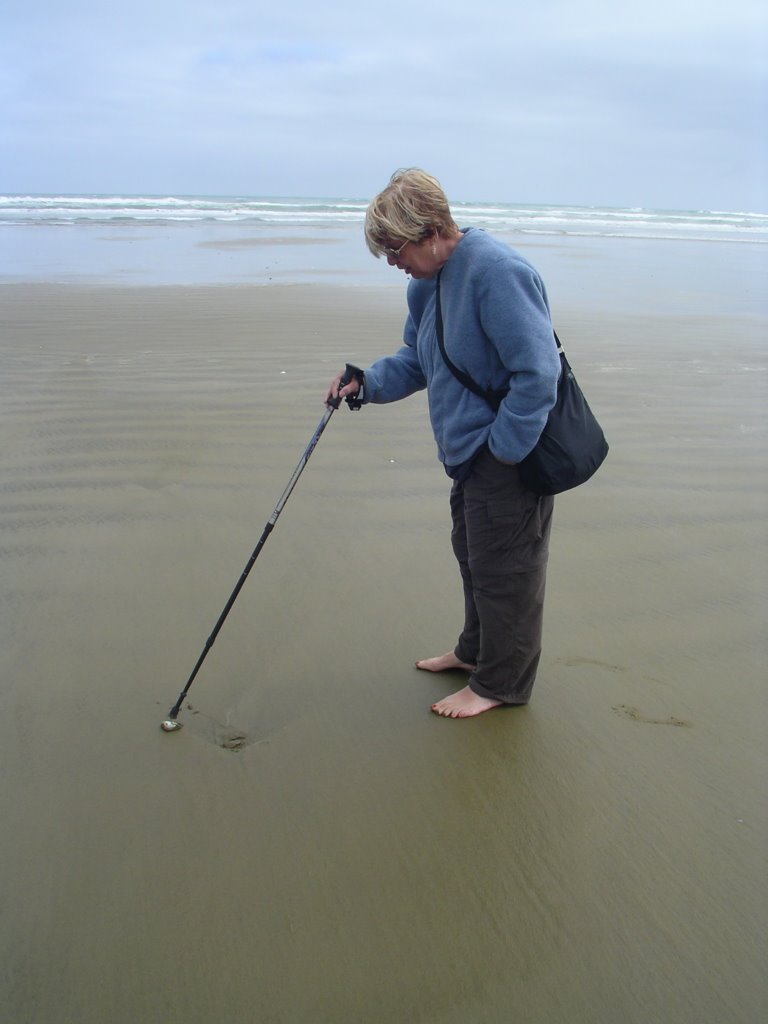
12.4.06

7pm Tuesday, April 11, 2006 Nelson

I’m listening to Ella Fitzgerald and trying to remember what the heck has happened that last few days. I blame my lack of memory on the nasty flu/cold that attacked me in Greymouth.

In Christchurch we got up early to catch the bus to the train station. In fact, we were 30 minutes early and that gave us the opportunity to talk to a nice Australian guy who was travelling around New Zealand for a bit before heading to Samoa for a 6-week medical internship. Eventually, two train station shuttles screeched up to the sidewalk and started tossing bags into trailers and people into seats. At one point I looked up to see Mom sitting in the shuttle but wasn’t sure if I would have a seat.

I barged in front of a girl who was sitting on the street next to her luggage. She turned out to be the somewhat ditzy girlfriend of the Australian guy. He had to argue with the bus driver to get her onto the shuttle because she’d waited too long to get her luggage to the trailer and there was no more room. The driver had to unpack the trailer and repack it to get her luggage on board.

Regardless, we all got to the train station safely and on time. Mom innocently jumped the queue to get seat numbers which earned her a few looks. Once armed with seat numbers we dragged our luggage to the last car of the train, where two guys were tossing luggage into the car with joyous abandon.

Our train car, car L, was the third from the front. We had seats in the middle of the car, in front of two elderly gentlemen from Singapore and next to a few folks from Australia. We were all excited about the trip and there were smiles on everyone’s faces when we finally started rolling along the tracks.

The train passed through the backyards of numerous scrungy businesses and homes until we reached Rolleston, when the landscape changed from urban decay to rolling farmland. That was nice, but things really got interesting when the train started climbing into the mountains. We crossed a number of trestle bridges (viaducts) but I couldn’t get a good look at them because the viewing platform behind our car was full of people angling to get a good photograph. The conductor assured us that the bridges were fantastic, so I’ll have to believe him.

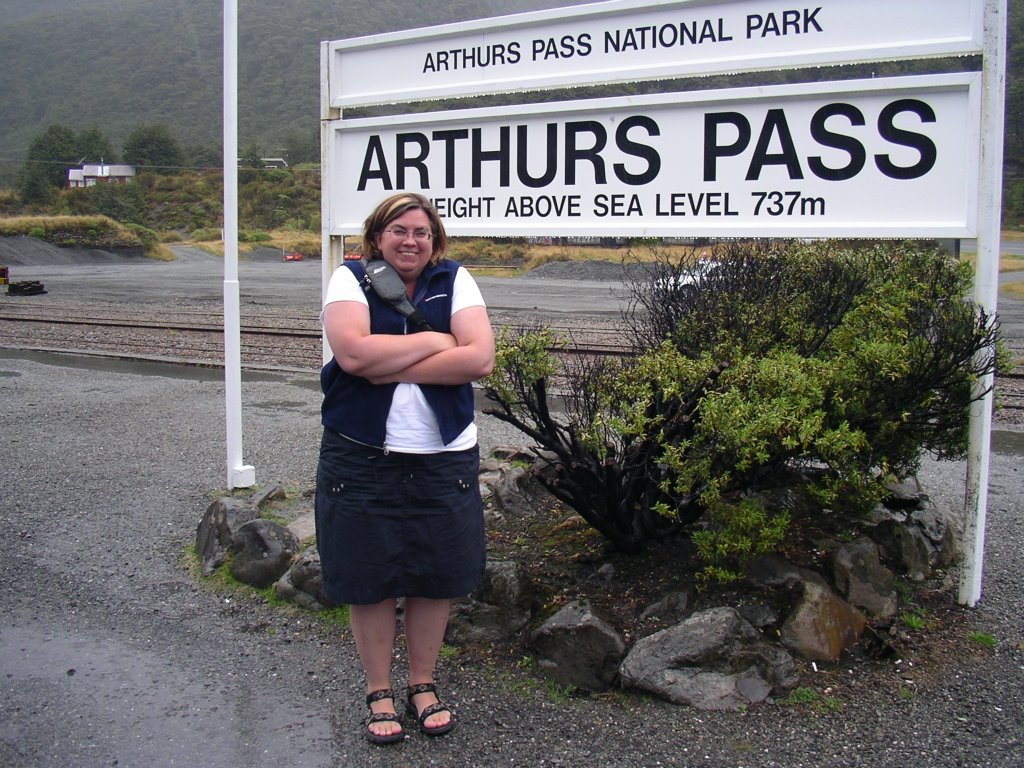
We arrived at Arthur’s Pass around 11am. The train stopped briefly to drop off and pick up passengers, and we were allowed to step off the train briefly. It was quite cold, probably around 4C but it felt colder because I was wearing a short-sleeved t-shirt and a skirt. Arthur’s Pass was quite a depressing stop, but I couldn’t help thinking it would look absolutely beautiful with a coat of snow on the churned-up ground and on the rooftops of the derelict buildings.

Brrrr! Me at Arthur's Pass in totally inappropriate clothing:

The trip from Arthur’s Pass to Greymouth was quite uneventful. The best of the scenery was behind us, plus we had to keep stopping to call ahead and change tracks due to work on the rail lines. We arrived in Greymouth at 1:30pm, more than 30 minutes later than scheduled.

The platform at Greymouth was crowded with people waiting to get onto the train, and was overflowing with people as soon as people started to disembark. We struggled to the rear of the train to collect our luggage, which was being thrown off the train into throngs of people. It took me close to 20 minutes to find our four pieces of luggage amongst the people and the odd piles of bags left strewn about the platform.

We looked at the town and realized that our hostel was on the side of a hill. I saw a cabbie pull into the train station and waved him down. He explained that he had to drop another couple off but that he would return to pick us up. I stepped inside the train station to look for a map of the town and was shocked when Mom yelled at me because the cabbie was loading our luggage into his cab. I jumped into the cab and he dropped us off at the hostel – grand total, $4.50, but worth every cent.

The hostel was situated in a building that used to be a monastery. The chapel had been converted to a sitting room and lounge. The halls were lined with beautiful dark wood and the doors had handles exactly in the middle, which meant they were about 5 feet from the floor. I felt like a little kid because I had to reach up to the handle.

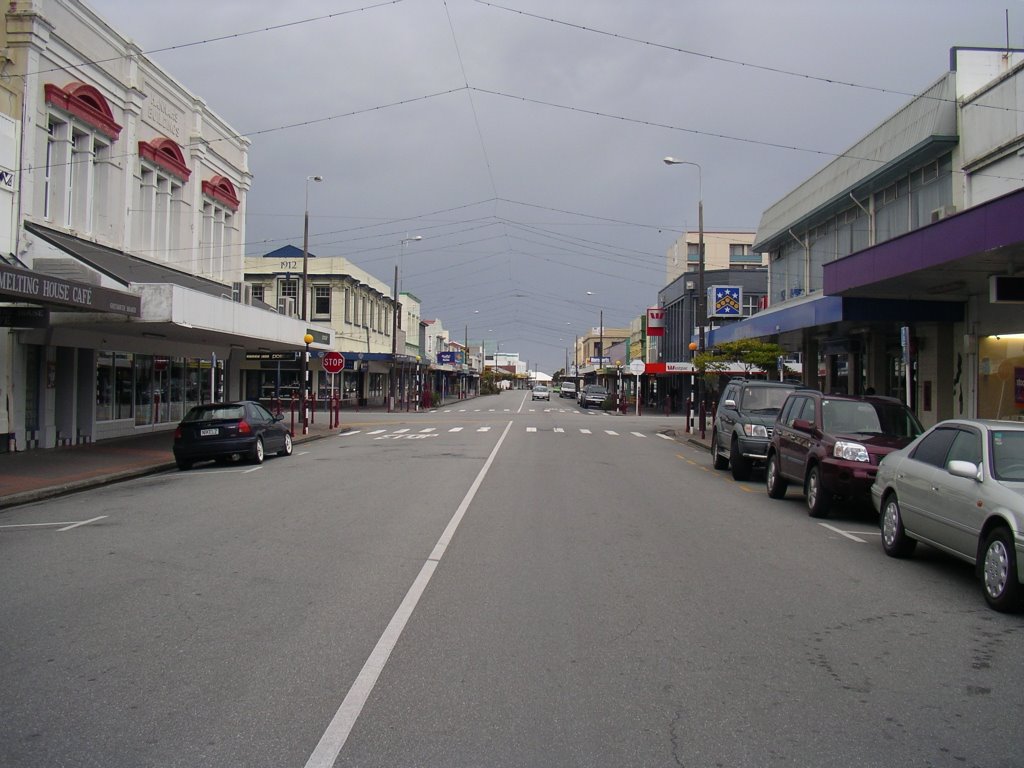
After we settled in we walked from the hostel into town. It was a Sunday so very few shops were open. (That’s one surprising thing about New Zealand – most shops close at 4pm during the week and hardly any shops are open on Sundays. Even in the big cities you feel like you’re walking through a ghost town on Sundays.) A jade shop was open so we spent some time admiring the jewellery. We also went into the gift shop at the railway station. We bought some food at the grocery store and were walking back to the hostel when it started to rain heavily and the sky lit up with fork lightning, followed a few seconds later by rolling thunder. We had umbrellas but our feet and clothes were still wet when we got back to the hostel.

Greymouth's main street, shut up tight on Sunday:

We had some pasta left over from Rotorua, so we cooked up another batch of spaghetti sauce and boiled the remaining pasta. It was delicious and we thoroughly enjoyed our “home-cooked”meal.

After dinner we went up to our room and I put my Amelie DVD into my laptop. Mom was enjoying it but I was starting to feel quite hot and stuffy-headed. Eventually I asked if we could stop the movie (just before the ending, too) so I could go to sleep. Mom knew something was up and I told her I wasn’t feeling well. She went into full Mom-mode and insisted that I take some Tylenol Flu. I did, then passed out.

In the morning I felt awful, but with Mom’s encouragement I managed to get up at 8am to have some coffee and to collect our rental car. They’d told us over the phone that we’d have to drive a larger sedan but when we got to the rental car agency they had a small Toyota Carolla for us, the same make and model we’d driven around the North Island. The only problem was that someone had left the window open over night and half of the back seat was soaked with rain water. We took the car anyway, thinking that the water would evaporate shortly. It did, but it left behind a foul odor similar to that of spoiled cream.

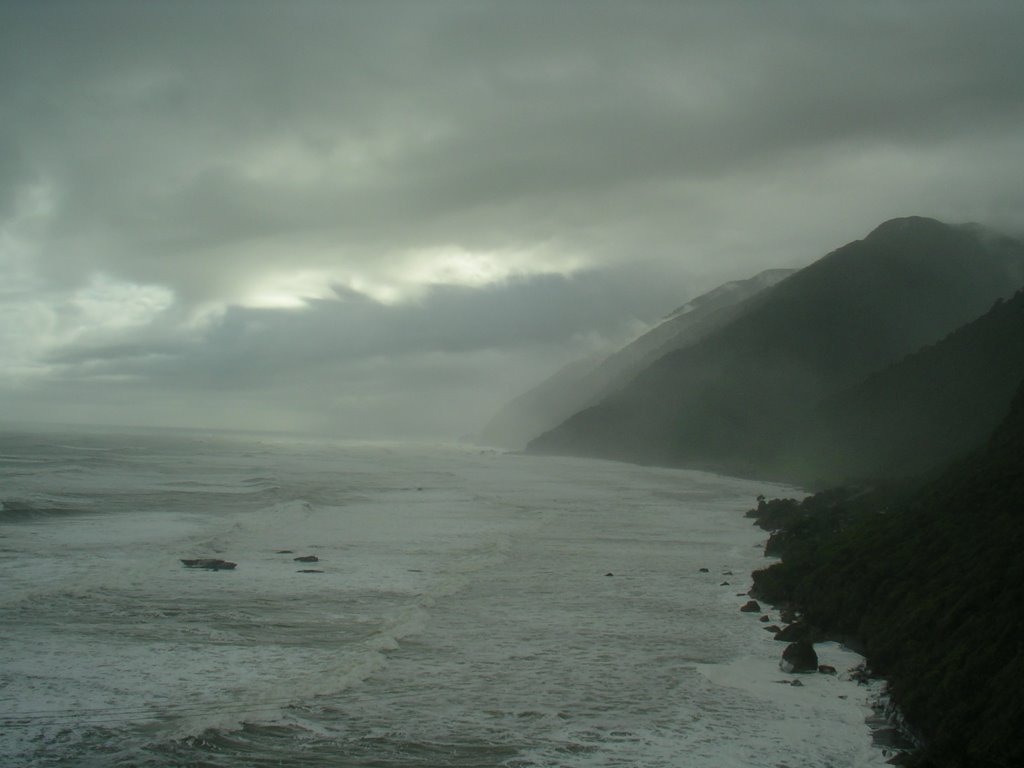
It was raining when we left Greymouth, but we stopped at the side of the road a few times and got out to admire the crashing surf. It was unlike anything we’d seen in New Zealand and we were marvelling at the height and ferocity of the waves. Thinking that we’d seen the best of the coast, we got back into the car and were making good time when we saw a bunch of cars parked at the side of the road and a collection of cafes. We pulled over and discovered that we were at the entrance to the Te Papa Atawhai Pancake Rocks and Blowholes park.

The wild coast north of Greymouth:

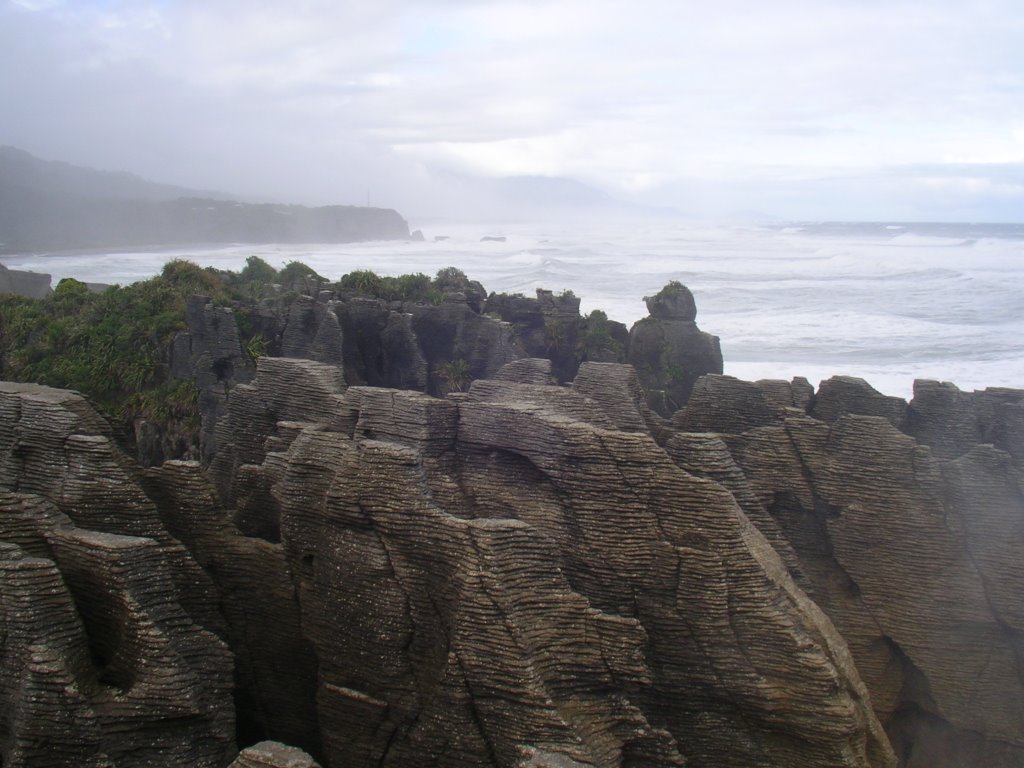
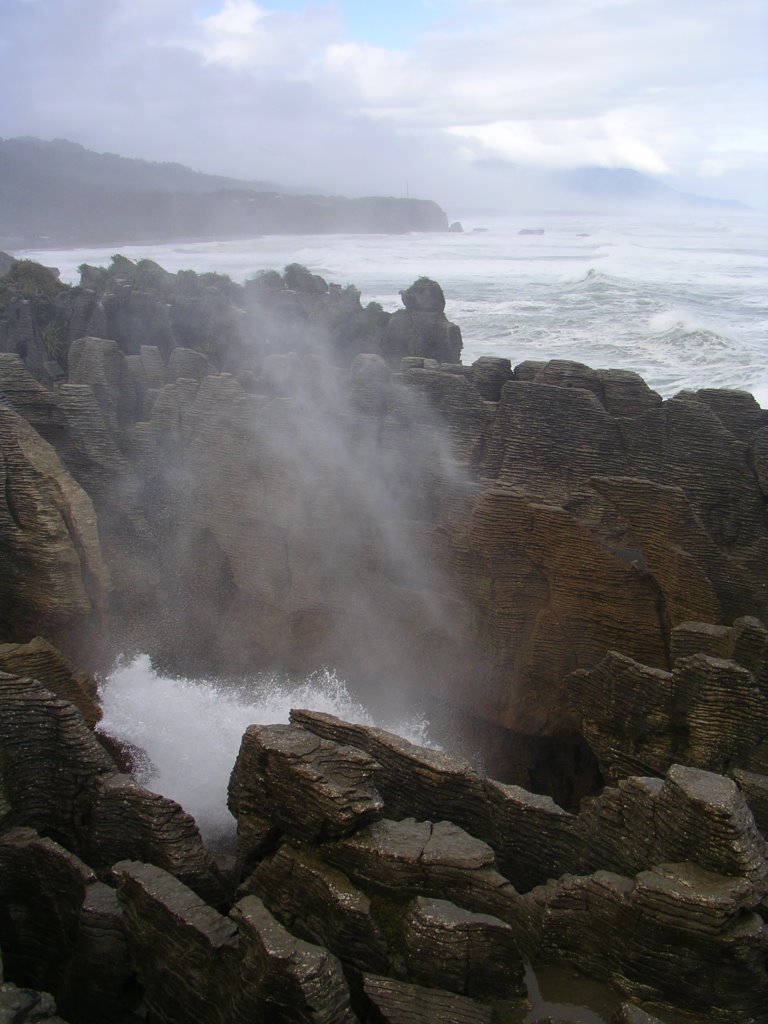
We walked down the path and were astounded by the layered pancake rocks. That was just the beginning, though – the raging surf had cut into the rocks and created holes. When the surf crashed into the rocks some of the water was forced up through the holes. The sound was amazing and we were covered in fine sea spray from the spurting water. We spent close to 45 minutes in the park and were almost reluctant to leave.

Pancake rocks:

Blowholes:

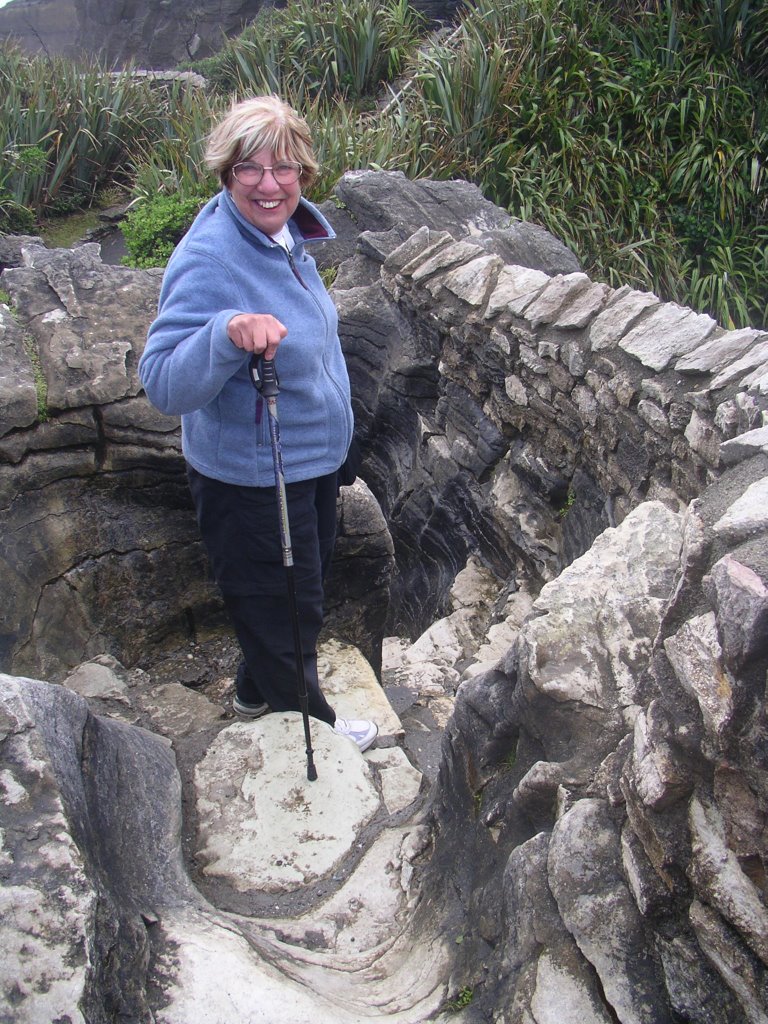
The non-wheelchair accessible track around the park:

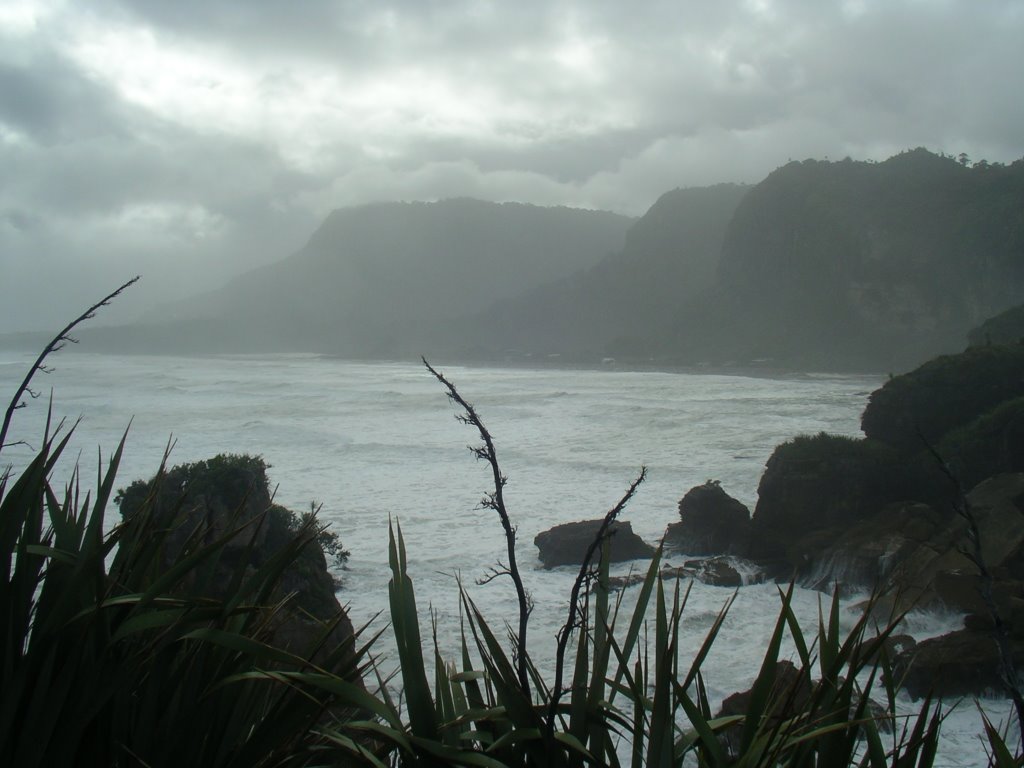
View of the coast from the park:

The rest of the drive to Nelson was quite boring. We found our way into the city center and to the trust information center. There was a huge lineup so I found a free map and a hostel brochure and navigated to the hostel without asking for help. We booked in and then walked around the area, then bought a few groceries and returned to the hostel. We had left-over spaghetti for dinner and were in bed by 8pm.

Mom slept fitfully but I was drugged to the gills and slept soundly until 6am. We got up and showered, had a bit of breakfast, then drove to Kaiteriteri for a half-day cruise along the coast of the Abel Tasman park.

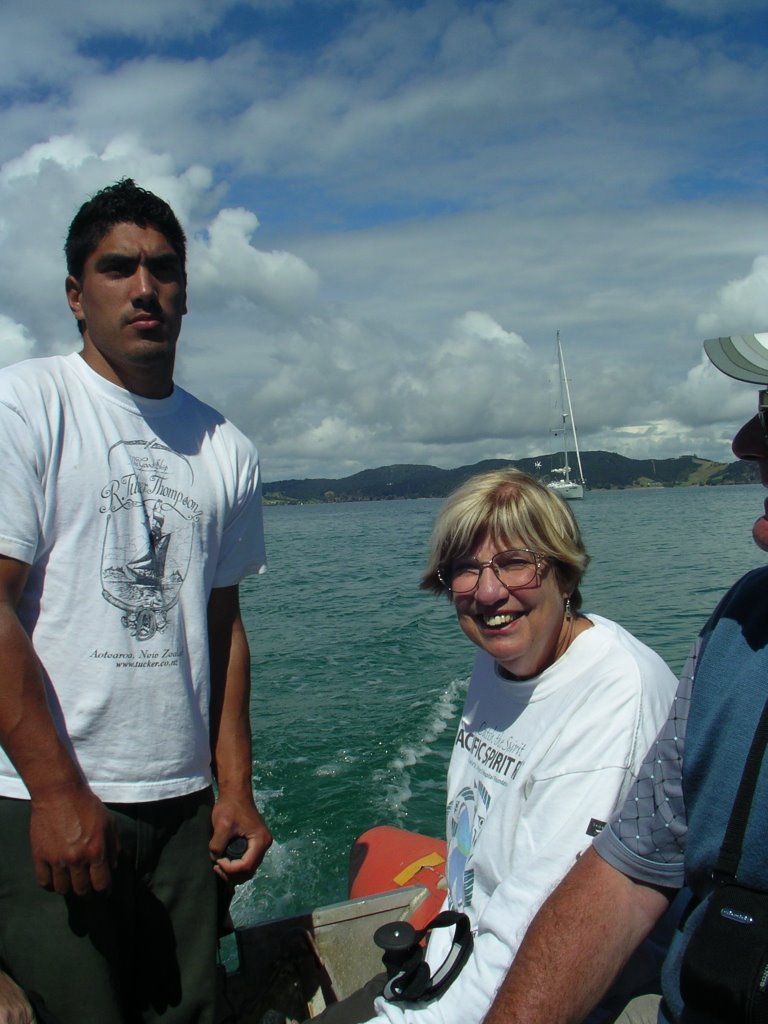
Most of the people on the boat wanted to hike in the park, so they were ferried from the boat to shore by Zodiac at specific beaches. Mom and I – as well as six other oldies – stayed on board the whole trip and looked on somewhat enviously as hikers returned to the boat, flush with stories about the great hiking.

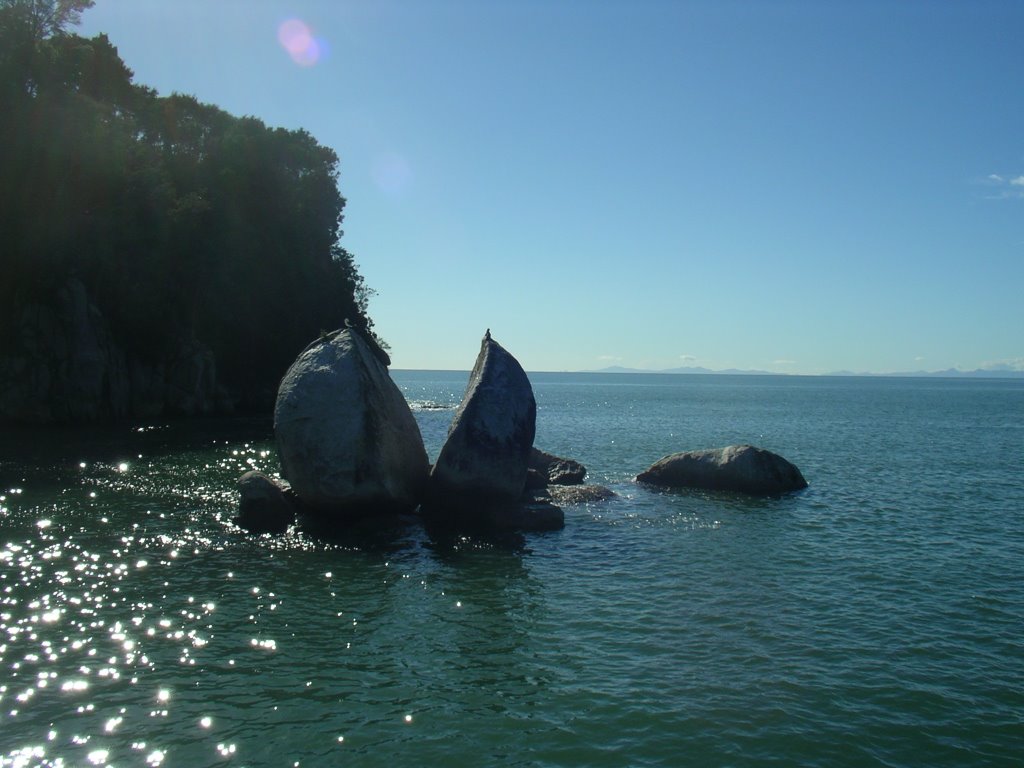
Split apple rock along the Abel Tasman Park coastline:

Soaking up the sun and wind on the ferry:


We got back to Kaiteriteri around 3:30pm and drove back to Nelson, confidently navigating the roundabouts and rush-hour traffic and parking next to the hostel as if we were locals. We hadn’t had lunch and were quite hungry so we walked around until we found a place with an interesting menu. The Victorian Rose Bar was situated in the oldest building in Nelson and in the past the building that housed an insurance company, the city council and so on. It was lovely and we settled in to a fantastic meal. Mom had lamb and a crisp green salad while I had chicken with salad and a small but satisfying pile of French fries.

Tomorrow we’re off to Picton. Not sure what we’ll do. Perhaps we’ll walk along the Queen Charlotte Track. Perhaps we’ll go on a mailboat tour. More on that later.

7pm Saturday, April 8, 2006 Christchurch

Mom was up at 5am, ready to go. Unfortunately she had to wait until 7am for my alarm to go off before she could start her day. My alarm didn’t go off immediately so she leaned over me (I was lying on my back) and said in a normal voice “Rena, it’s 7am.” I nearly climbed the wall because I woke up so suddenly, and to a person looking right into my face. Eeek!

We had coffee at the hostel then drove to the airport. We were about 2.5 hours early but Mom really wanted to get going. So, we got up and went. Then, we waited. The young fellow who had checked us in told Mom that we would be boarding the plane at 9:45am. A plane boarded at 9:45am but it had a different flight number and gate. Mom was sure it was our plane and started to worry that we’d miss our plane so I encouraged her to go and ask an Air New Zealand representative. She came back and informed me that it wasn’t our plane.

The flight from Napier to Wellington took 45 minutes. We arrived just before noon so the first order of business was to find a place to eat. We ended up buying sandwiches at a coffee shop called Fuel and eating our lunch in the hall outside Gate 10.

The flight from Wellington to Christchurch was on a huge Boeing 737. I was marvelling at the number of people travelling on the plane when I realized it was Saturday and people were probably visiting or going on a short weekend getaway.

After we collected our luggage in Christchurch we caught a shuttle to the hostel, where – sigh – I learned that our room was on the second floor. No elevators, just two flights of stairs. So, I sucked it up and carried our two large cases (70 pounds each) up to the room. Then I went downstairs and carried our two small cases (15 pounds each) up to the room. Mom carried my laptop and her backpack.

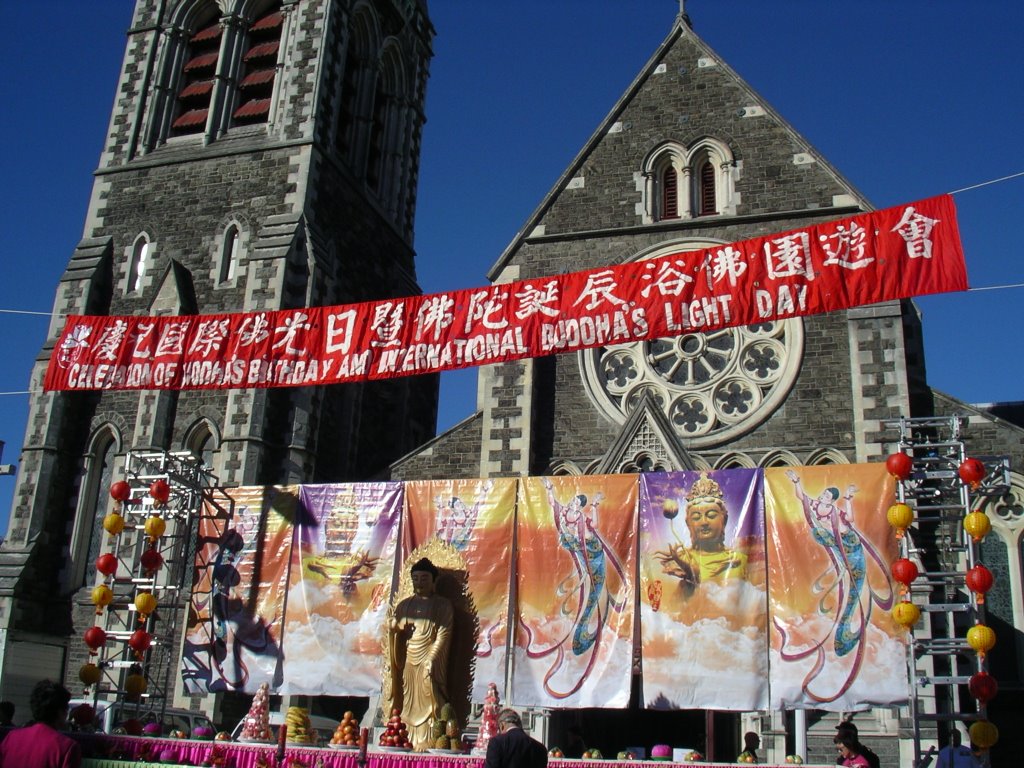
We left the hostel immediately and walked to Cathedral Square. There was a big celebration of Buddha’s Light Day in the square. There was a giant Buddha statue surrounded by bowls of sand in which devout Buddhists could light sticks of incense. There were other tables set up with bowls of water, but I wasn’t sure how those would be used.

Buddha's Light Day banners and Buddha statue:


There was also a stage where people were performing to ear-splittingly loud music. Next to the stage were a row of tables for the distribution of educational materials. Directly opposite was a long row of cooking tents where people were enjoying a variety of vegetarian dishes.

Toward the back corner of the square was a small collection of hawker’s tents. I was drawn to the tents in which people were selling jewellery. In one tent I was considering buying a ring when the hawker asked about the fish hook necklace I was wearing. I told him that I bought it in Rotorua from a Maori-run artists collective. He told me there was a Maori artist a couple of blocks down the road who had good work. We thanked him and hared off in that direction.

We thought we had missed the shop because we had walked about four blocks and not seen a single store selling jewellery. We agreed that we were going to cross the road to the Art Gallery then turn around and head back to Cathedral Square. I noticed that there was a smaller group of hawkers set up at the Art Gallery. Then I noticed a sign that said “Maori Art and Jewellery”. Bingo!

We walked down a series of twisty hallways, past a lawyer’s office, an architect’s office, and an Internet café. The store was the located at the end of the hall in a small room, which in all honesty was smaller than most people’s bathrooms. There were two other people there so we walked around them, admiring the work on the walls and on a few small tables.

I immediately noticed a fish hook necklace made of wood and bone, with waxed cotton whipping at the join between the wood and bone and at the eye of the hook. It was awesome, and it was only $45!

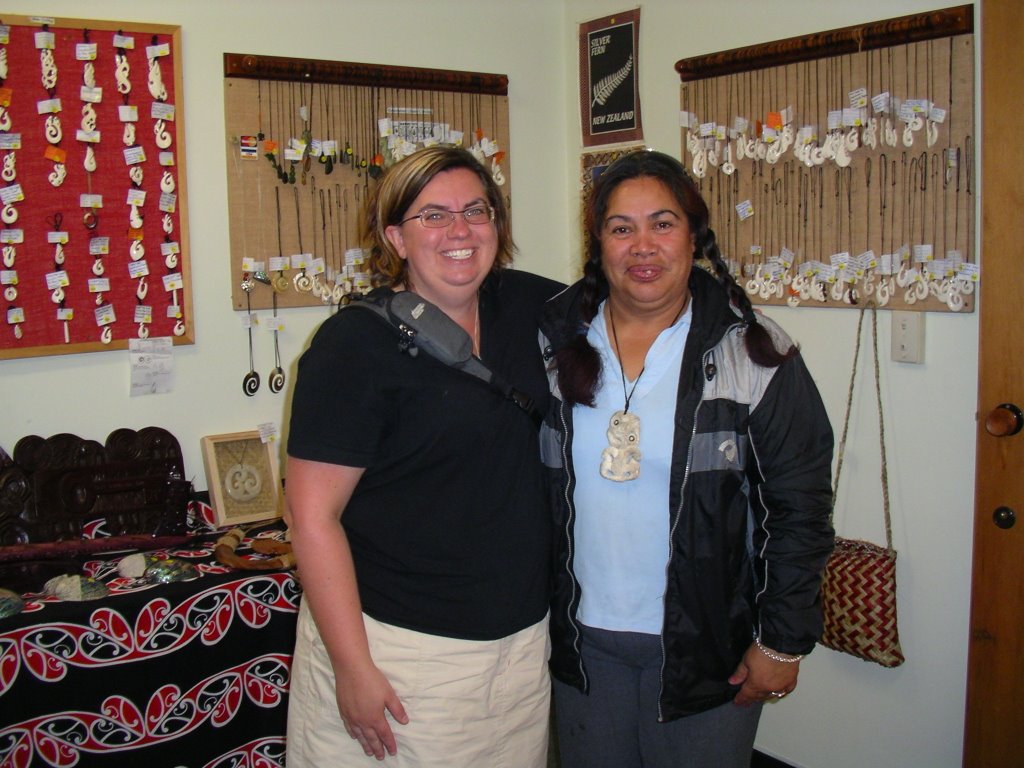
After the other people left the woman behind the counter greeted us warmly and asked where we were from. We didn’t stop talking for another 20 minutes. Fina explained that she collected the bone from the butcher, boiled it to clean off the meat and sinew, removed the marrow, and bleached the bone to make it white. Then she explained that she used a butcher’s band saw to cut leg bones in half so she could use each half for a different piece.

Me and Fina:


More importantly, she explained that it was important to start and finish each piece in a day. Maori artists don’t like to leave work unfinished and will work long hours to finish their work in a day. Fina also mentioned that, traditionally, Maori men did all of the carving but she and many other women had started carving in recent years. Women still can’t carve waka (canoes) but there is increasing acceptance of women carving tikis, fish hooks, and other art works.

We talked about a lot of other things, but eventually said goodbye. I asked the shop address so I could send her some examples of west coast First Nations art. I also promised to send a photo of Fina and I that Mom took.

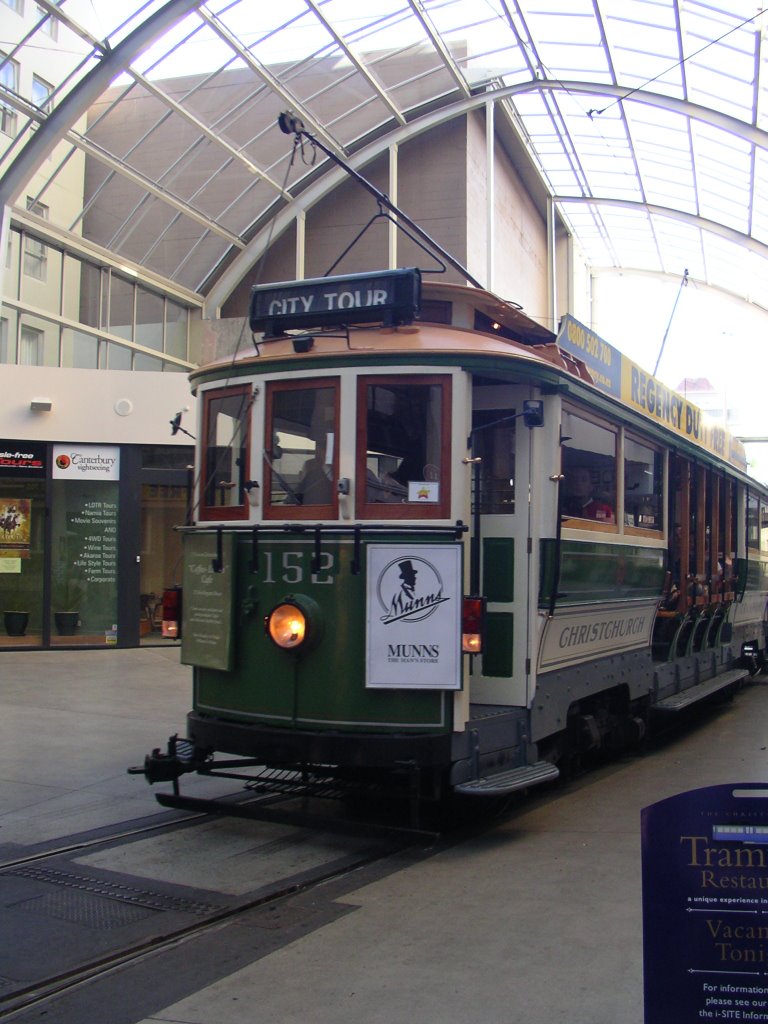
After visiting with Fina we walked back toward Cathedral Square. I noticed a sign “Punting on the Avon”, something I’d hoped to do while in Christchurch. Unfortunately there was a long line-up and the day was almost over. Instead, we chose to take a ride on the restored tramway. It was quite pleasant and I really enjoyed the architecture along the route.

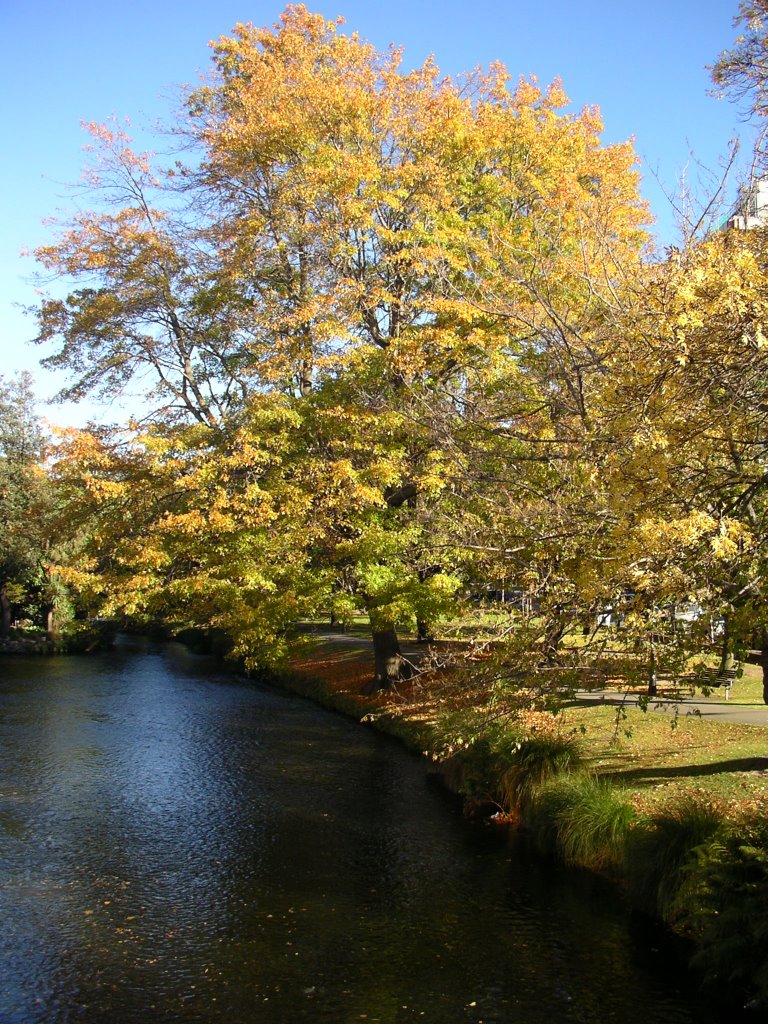
The Avon River:


The tram:


Actually, I’m enjoying the architecture in Christchurch more than that architecture in Napier. I’m just not a big Art Deco fan, I guess. I much prefer old brick buildings from the late 1800s, like the ones in Christchurch.

After the tram ride we walked back toward the hostel and had a magnificent dinner at a Thai restaurant located a block away from the hostel. Mom was a bit concerned because no one was in the restaurant when we entered, but was soon reassured by the huge number of people coming by to pick up food that they had ordered over the phone. We had spring rolls, pad thai and a yummy red curry.

During dinner I noticed a whole crowd of teenagers gathering across the street. They couldn’t be any older than 16 and it looked like they were lining up to get into a bar. I was starting to wonder about the drinking age in New Zealand when they all dashed up the alley. I still have no idea what they were waiting for.

Just having a quiet night in because we have to depart at 7:15am to catch the train across the Southern Alps to Greymouth. I love trains, and I especially love trains that travel over trestle bridges, through tunnels, and across stunning landscapes. It should be a good day tomorrow!

8pm Friday, April 7, 2006 Napier

Dinner with Stew was lovely. We went to an Indian restaurant and had pakoras to start, then a nice white fish cooked Tandoori style, followed by rogan josh, shahi paneer, and basmati for three people. The pakoras were nothing like those you would get in Vancouver or Victoria. They were bits of potato covered in flour batter and deep fried. Still, they filled the spot and they were served with a tasty sauce.

We were all tired after dinner so Stew dropped us off at the motel and departed for home, a bach on a surf beach. Mom and I fell into bed and slept like logs. (Well, Mom woke up a couple of times and enjoyed listening to the waves crashing onto the beach.)

This morning we woke early and were in town at 8:45am, expecting the Internet café to open at 9am. No luck – it didn’t open until 10am. So, we went to McD’s for breakfast, where Mom enjoyed a good feed of waffles. We walked around Gladstone Steet (the main drag) for a bit until the Internet café opened, then got down to business at the computer.
On the way to Gisborne Mom had the radical idea of delaying our departure by a week so we could enjoy the South Island. We contacted our travel agent in Victoria, who quickly replied and explained that we had to call Singapore Airlines ourselves to change our tickets. So, after I finished updating my blog we walked down the street to a pay phone and I called Singapore Airlines.

The woman who answered at Singapore Airlines was quite helpful, and explained that because of the school holidays most of the flights were booked. We could get a later flight from Auckland to Singapore and from Singapore to Incheon, but the leg from Incheon to Vancouver was completely booked. We then inquired about upgrading to business class, but she explained that she would have to contact the Vancouver office for pricing. We agreed to call again on Monday for more information.

We departed Gisborne around noon, and optimistically expected to arrive in Napier around 2pm. Unfortunately, I didn’t count on the twistiness of the roads or the hills. I also forgot to fill up the car with petrol, and was a bit taken aback when the dashboard lit up with a wee gas pump to indicate that the car was dangerously low on petrol. I stopped at the next town to inquire about the availability of petrol and the lady at the café counter gave me a look of great disappointment. There was nothing until Napier. We were turning out the door with the idea of asking a local farmer if he had any petrol stores when she said that the next town, Tutira, had a pump but they charged an exorbitant amount per liter.
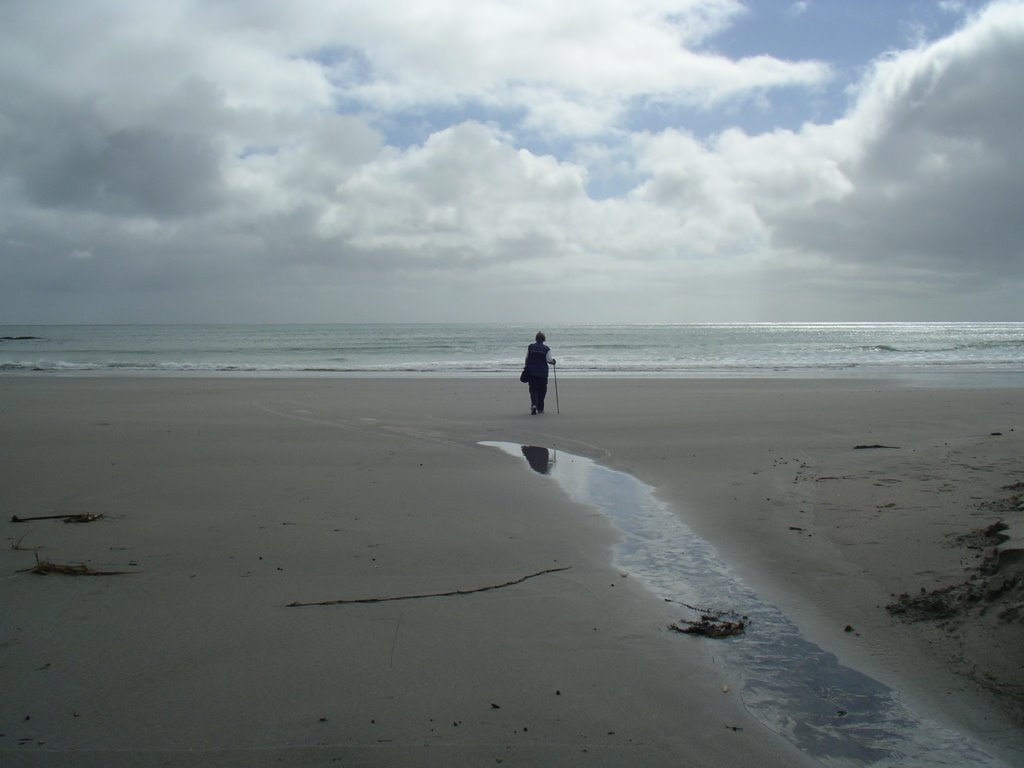
That was fine, I said. We drove on for another 20 minutes. Tutira consisted of a dairy with a petrol pump. That was all we needed to be happy! I put $10 into the car, just enough to get us to Napier. We left immediately because they didn’t have a public washroom and I dearly needed to relieve myself.
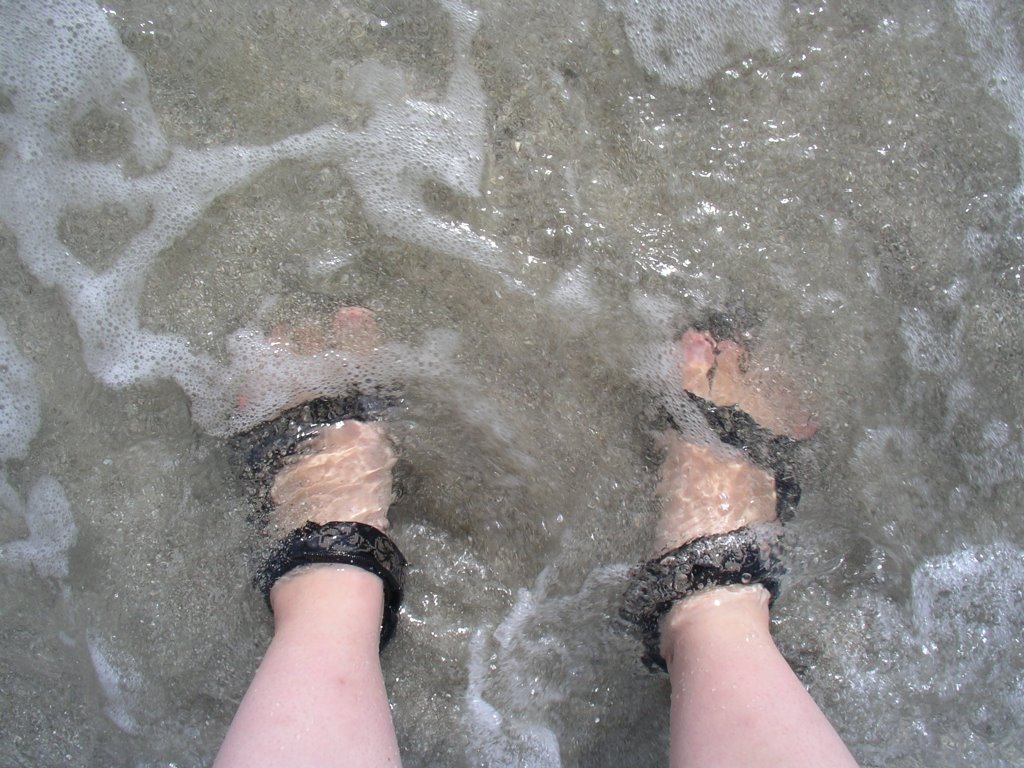
We stopped at a BP station on the outskirts of Napier to fill up on reasonably-priced petrol (a measly $1.56/liter) and a much-needed bathroom stop! I checked the map before we left the BP station and decided to take highway 50 into town. It took us through the port and the industrial area of town but was extremely easy to drive. We found the Napier information site with no problems, booked our hostel, and bought a map so we could go on a self-guided tour of Napier’s world-famous Art Deco buildings.

We spent about 2 hours walking around Napier admiring the buildings, then decided to stop for dinner. We found ourselves at Jo Miguel’s Tapas Restaurant. The staff were decidedly un-Spanish but the food was excellent. They even brought over the guest book for us to sign! I looked through and found several visitors from Ottawa and Toronto, the odd person from BC, a hardy soul from the Northwest Territories, and one lone Newfoundlander.

Tonight we’re staying at the Napier YHA. It’s perhaps the best YHA we’ve stayed at so far, although both of us are afraid of falling down the stairs on the way to the bathroom. Let’s just say that it’s a relief to stay here after the disaster at Rotorua.

Tomorrow morning we fly to Christchurch on the South Island. We’ll leave Sunday to take the train over the Southern Alps and through Arthur’s Pass to Greymouth. We’re not sure what we’ll do from there. We have to call Singapore Airlines to find out if we can catch that flight home on the 26th. If not, we’ll probably rent a car and drive north to Nelson and Picton, and visit Stew’s Mom in Blenheim before heading over to Wellington on the ferry.

7.4.06

1pm Thursday, April 6, 2006 Gisborne

The drive from Rotorua to Whakatane was okay, but from there we turned onto highway 35 which took us east along the Bay of Plenty. The roads were narrow and often twisted devilishly along the mountainside with narry a barrier between the road and the steep cliffs. We stopped at Hick’s Bay around 4pm for ice cream and to use the phone. I called Bill and Jan’s to say we were running late, and Jan said that was no problem. She advised us to stop at the church in Tikitiki before heading on down past Ruatoria to where they live in the village of Tokomaru Bay.

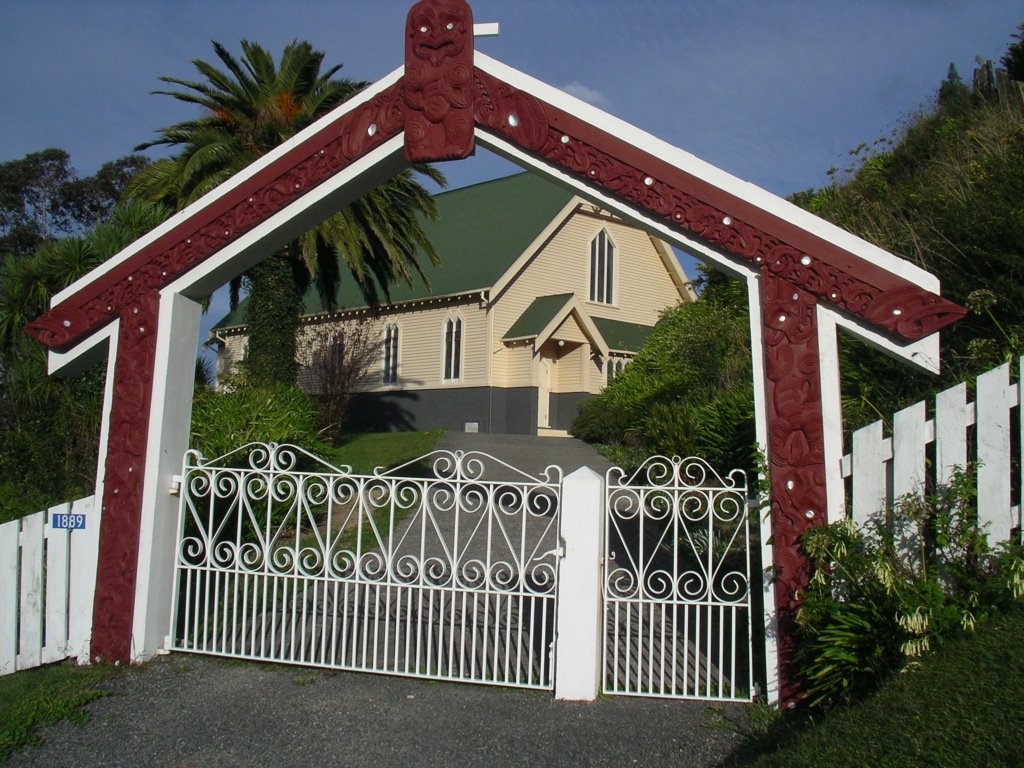
The drive from Hick’s Bay to Tikitiki wasn’t too bad. We passed the church and had to turn around and head back to it. From the outside it looked like any other church, with the siding painted beige and the roof a nice green tile. We walked around the church, not quite sure if it was open to the public. At the front were two sets of double doors. Mom tried one of the doors and it was open, so we went inside.

The church at Tikitiki:


The inside of the churce was entirely Maori. The pews had Maori carvings on the ends, the pulpit had traditional flax weavings and wood carvings, and even the piano was placed underneath two arms of carvings. The best thing in the church were the cushions. I’m not sure if each family provided their own cushions for the pews, but there were a multitude of hand-made cushions on the pews. Some were quite crudely constructed while others were beautifully stitched.

From Tikitiki the road deteriorated. There were numerous washouts from the previous year that were still waiting to be fixed. The best thing about roads in New Zealand, however, is that there are signs to alert you to every obstacle and road condition. Also, there are signs to indicate a reasonable speed around the obstacles or across the road. Unlike Canada, where a 30 km/h corner can be taken at 60 km/h, in New Zealand if the sign advises you to drive at 30 km/h, that’s because you really need to drive at 30 km/h. And, as soon as you’ve passed through the 30 km/h zone you can resume the usual 100 km/h speed along crazy, twisty country roads.

The other interesting thing about the road from Tikitiki to Tokomaru Bay is that we saw a lot of birds and livestock. By that, I mean that at one point I nearly ran over a hawk that was eating a newly-killed opossum in the middle of the road. I also had to dodge numerous magpies and the occassional pheasant. Just when I was starting to get tired I nearly drove into two pigs that had escaped the farm and gone walkabout. There were also a few sheep on the road, and a herd of cows being transferred to a new paddock.

We arrived in Tokomaru Bay and stopped at the 4 Square to buy sweets for the kids and a couple of bottles of wine for dinner. We arrived at their house around 6pm and were greeted with hugs, which we fouled up by extending our hands for a handshake. This confused the kids to no end. We were invited inside where we were invited to talk about our travels until tea was served. There wasn’t enough room at the table for everyone so the adults sat at the table and the kids sat on the floor (Bill and Jan have six kids). The owner of the 4 Square, Bruce, also joined us for tea.

After dinner Bill and Jan arranged a game called Rat in which six different sweets were arranged on a plate. One person was sent out of the room while everyone else chose a sweet, which became the Rat. The person was then invited back into the room and had to choose one sweet at a time. If it wasn’t the Rat they could keep the sweet. If it was the Rat they could keep any sweets that they had already, but forfeited any further chances to choose sweets. The sweets were stocked up again and the process of choosing the Rat started again.

We talked a bit about Maori culture after dinner but felt a bit uncomfortable because Bill and Bruce disparaged the Tamaki Maori Village tour and hangi that we enjoyed so much in Rotorua. Perhaps ‘disparaged’ is too strong a word. They called it the “plastic Maori” experience. I pushed on, however, asking about economic development and other issues. Bill deferred to Bruce, who filled us in on local business and non-business.

The kids had gone to bed earlier, but the adults went to bed around 9pm. Mom and I were sleeping in the boys’ room. Mom had a twin bed and I had the lower bunk bed. We slept heavily and didn’t wake until well after 8am. The kids were already up and enjoying a healthy breakfast of muesli, yoghurt, and milk as well as hot porridge.

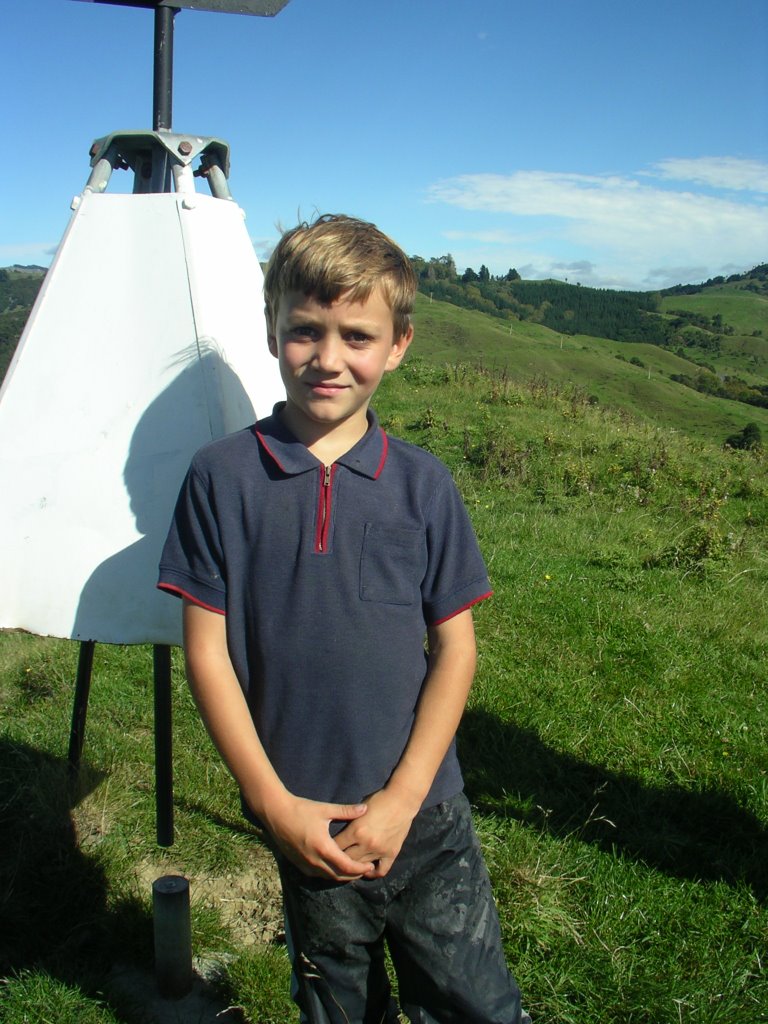
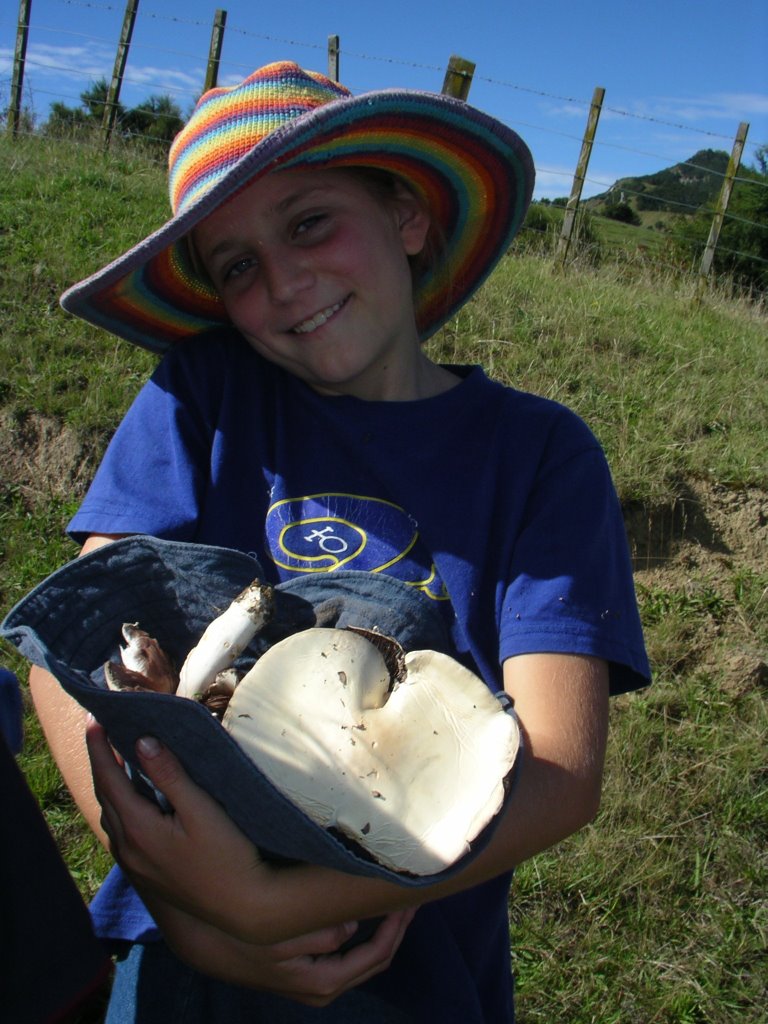
After breakfast we walked to the lower paddock where the kids fed the pigs and collected eggs from the chicken coop. We walked through some gates to the neighbour’s land (Papa Shorty) and walked up a steep hill until we had a full view of Tokomaru Bay. It was absolutely beautiful. On the way down the hill the kids found horse mushrooms and watercress. They collected them for tea, and Mom and I marvelled at how knowledgeable the kids were about the land.

Buela with eggs in her hat:


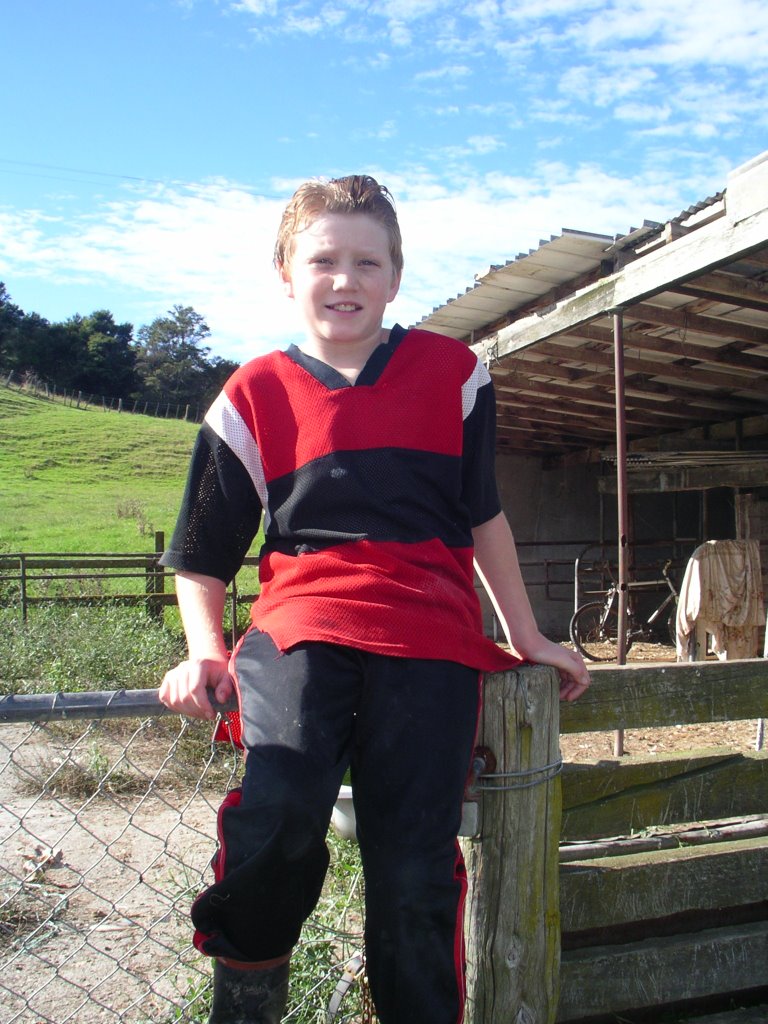
Joshua climbing over the fence:


Isaac climbing over the fence:


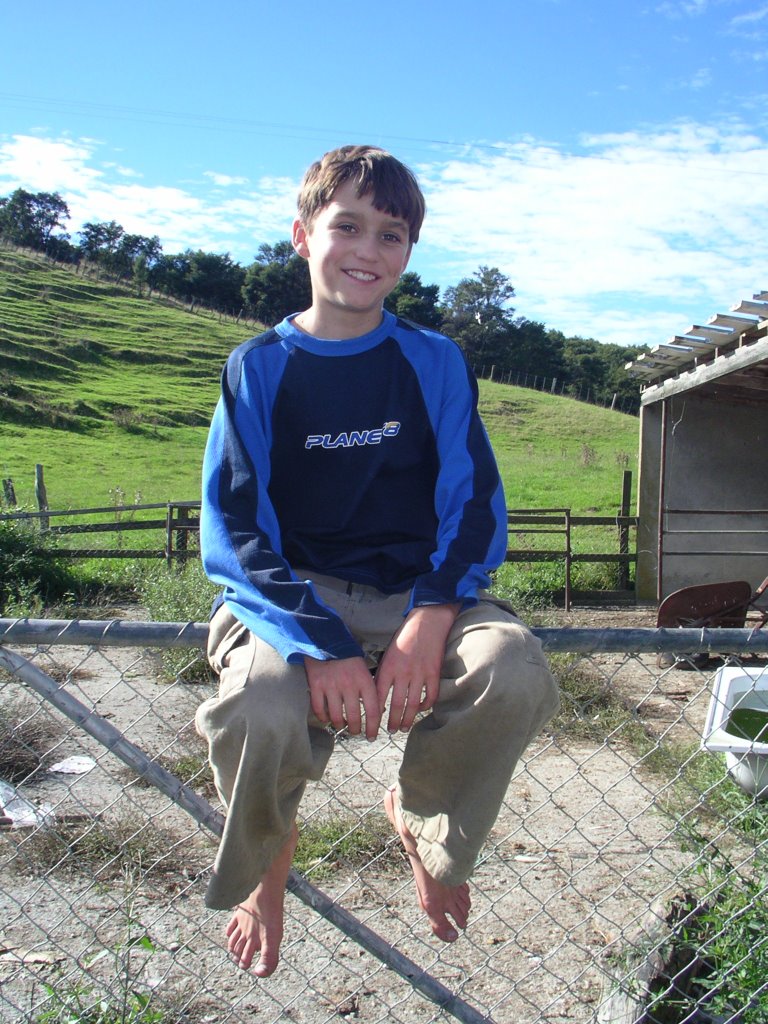
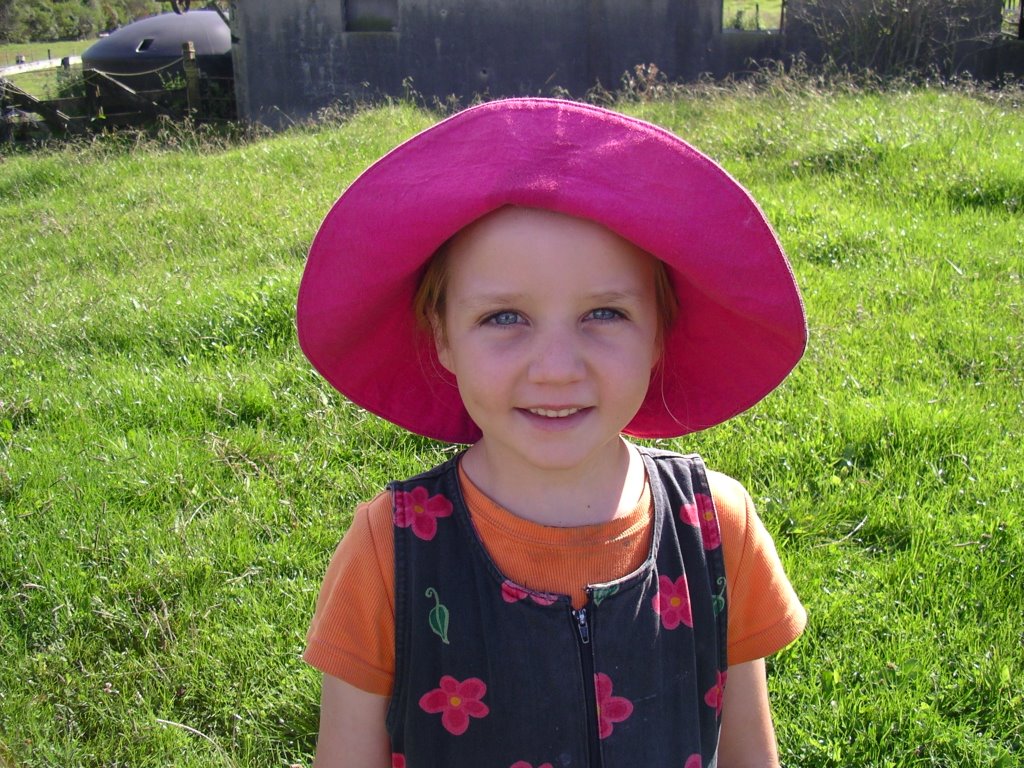
Grace in her sunhat:


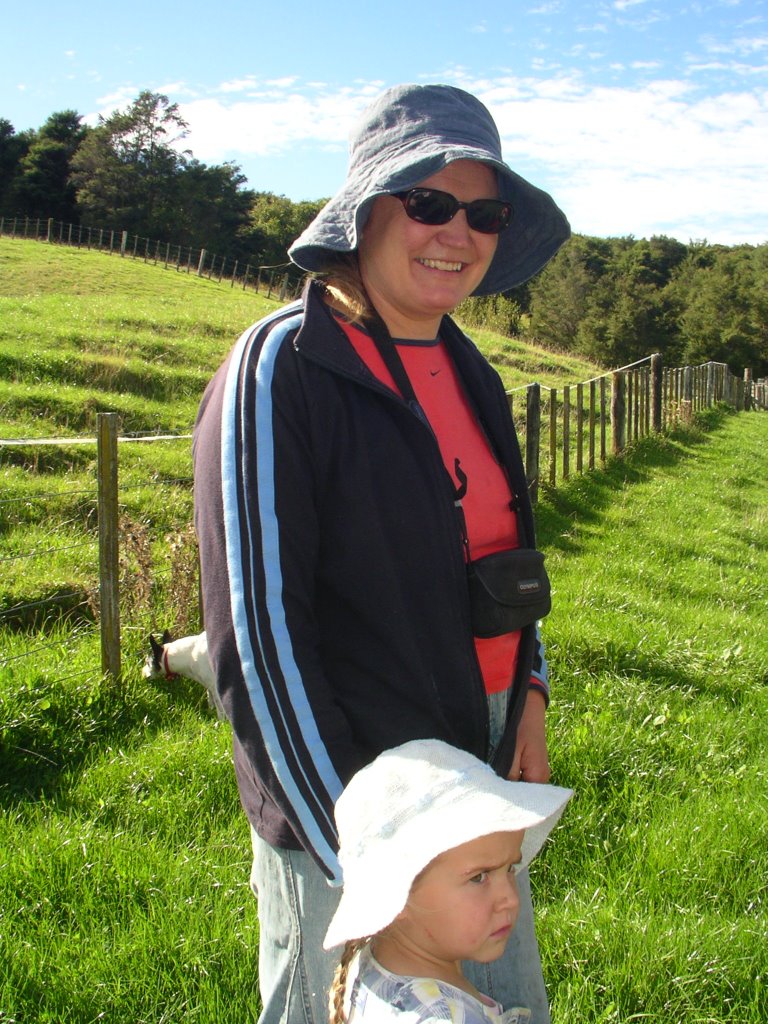
Jan and Beula:


Israel at the peak of the hill:


Didi with mushrooms:


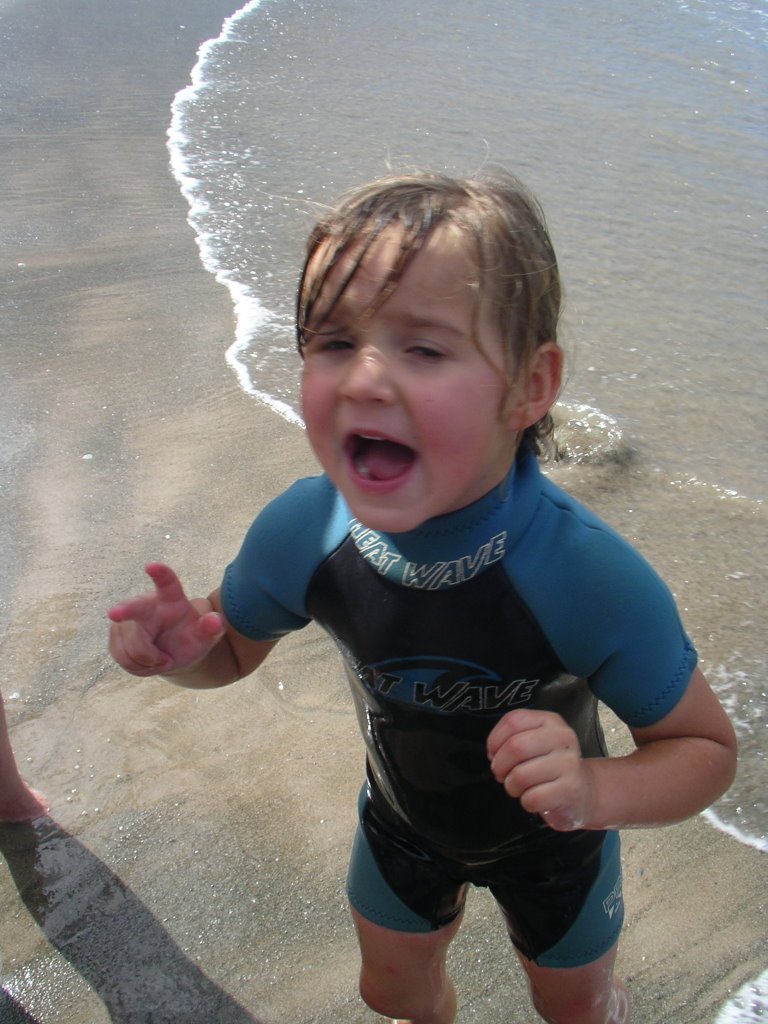
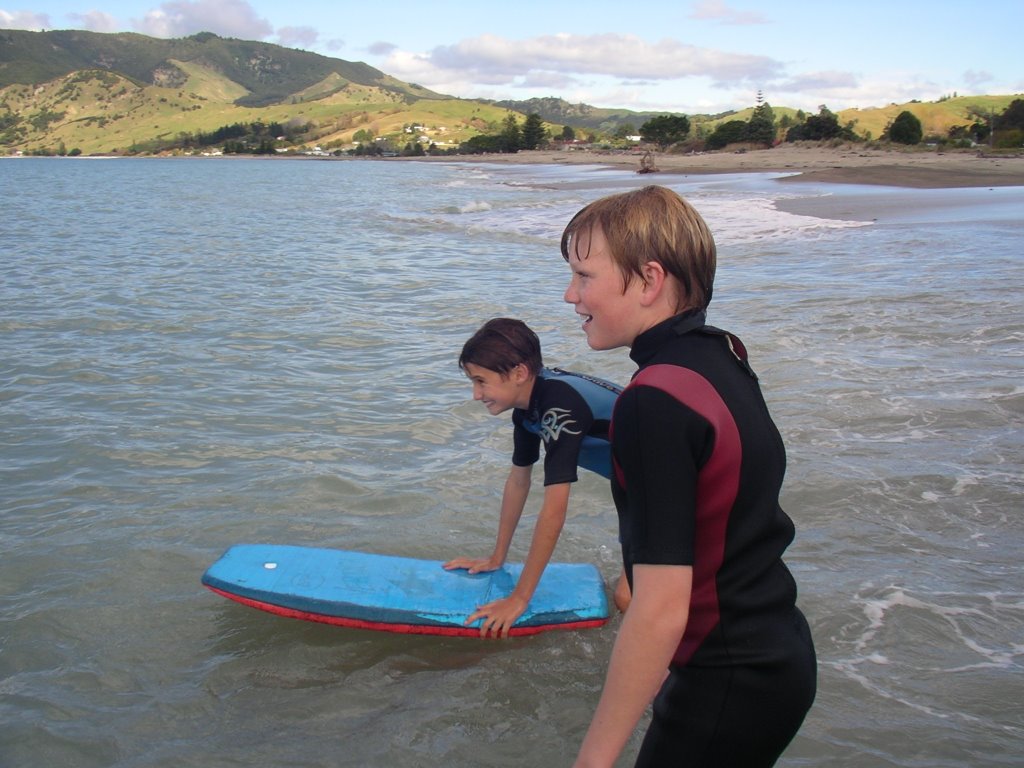
I mentioned that it would be a lovely day to swim and asked if the kids could come for a swim. (Jan home-school’s the kids.) She said that would be fine so the kids changed into their wet suits and Mom and I changed into our swim suits. The first beach that we tried had a strong rip tide so we drove past town to another beach. There were big waves at the beach that felt like they would pull you out to sea, but they didn’t. The kids pulled out their boogie boards and swam out into the ocean to catch the waves. I went out with them and thoroughly enjoyed floating about in the warm Pacific Ocean.

Beula in her wet suit:


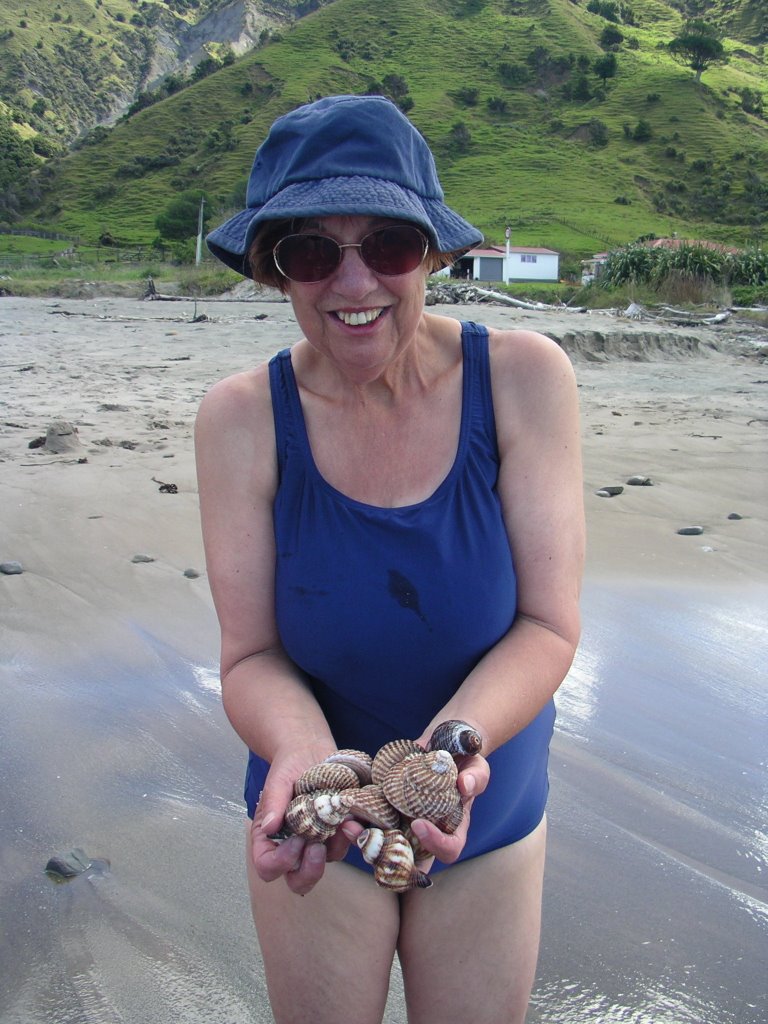
Mom and her shells:


Isaac and Joshua looking for the next big wave:


Mom and Jan stayed on the beach. I tried to encourage Mom to go into the water but there was something about the pull of the waves and the shelfs of sand that made her feel unsteady on her feet. Instead, she walked up and down the beach collecting beautiful sea shells.

We packed up and headed back to the house around 1pm so the youngest, Beula, could have a nap. Mom and I each had a shower. Beula wouldn’t go to sleep, perhaps because there were exciting visitors in the house, so we left and drove to Ruatoria.

We bought ice cream at the Ruatoria 4 Square, then walked down to Hughie Hughes Electronics. Jan had encouraged us to stop in there and say hello, because Hughie is Bill’s father. Hughie was on the phone when we arrived, but when he got off the phone we explained who we were and he showed us around the store then took us on an “official” tour of Ruatoria.

Hughie showed us the ambulance station, the police station, the old post office, a closed school, where he and his wife raised their four kids, and the local rugby pitch. From there he drove on a “metal” (gravel) road to an old marae on the ocean. It was just past the farm of Sir Apirana Ngata, now occupied by his daughter and grandsons. Hughie used to take his wife and kids to the beach by the marae in the evenings for dinner and a swim. The marae was closed (Hughie was kicking himself about that, because he could have asked a couple of people to give him the key to the marae, including Sir Ngata’s daughter) so we just looked through the windows.

What surprised me were the piles of foam mattresses and bedding. Hughie explained that when the marae was used for important occassions it wasn’t uncommon to have 40 people sleeping in the marae. The bedding was just piled up in a corner until the next big event.

We walked around the cemetary behind the marae as well. Hughie said he’d like to be buried there, and half-joked that the next time we visited New Zealand he’d have to entertain us there.

Back in town we said our goodbye’s, then drove back to Bill and Jan’s. We had a delicious beef curry for dinner, then looked at a slideshow of photos that I’d taken of the kids earlier in the day. We also looked at a few movies I’d taken of the kids boogie-boarding on the beach.

We had another satisfying sleep, waking up a bit earlier this morning so we could say goodbye to Bill before he went off to work. Just after breakfast Isaac presented us with a flax basket that he’d just woven. The flax was still green but he explained that as the flax dried it would turn a wonderful bone color.

I remembered that I had some gifts in my suitcase (still in the car) so I dashed out and dug them out. I gave Jan a carved necklace of BC jade and Bill a keychain with a casting of the raven. I gave the whole family a museum-replica bowl with coastal native designs.

Jan wanted to show us their B&B before we left so she loaded the kids into the car and we all drove to the B&B, just off the highway. The guests were still there but said it was okay for us to come in. It was absolutely stunning. It had been the post office and bank for close to 100 years and had an old vault, a telegraph room, as well as a sheltered outdoor room where people could collect mail from their post boxes. They’d stripped layers of paint from every wall and surface, renovated the staff room so it could be used as a kitchen, updated the water supply to support a modern bathroom, and generally renovated the building so it was now a gorgeous Martha Stewart-type B&B. Jan was quite humble about the B&B but both Mom and I were astounded at the beauty of the building, the renovations, and the decorations. You could tell that the whole family had put a lot of heart and soul into making it a beautiful place.

We said goodbye to Jan and the kids at the B&B and travelled south towards Gisborne. I had told Jan that I wanted to stop at Whangara, the village where the movie Whale Rider had been filmed. She explained that there were no road signs pointing to Whangara. She told me to look for a particular sheep station and then a road with a sign that said “school”. I saw the sheep station and turned left when I saw the school sign. We drove down, around, up, down, around, and finally down again to a beautiful bay.

There were no signs to say that we had arrived in Whangara but I knew we’d come to the right place as soon as I saw the marae with Paikia on the peak. The marae had been altered for the movie, obviously. The central posts in the movie were ornately carved but in the actual marae were plain posts with figures in front. There was carpeting around the edges of the marae floor and in the movie the floors were all wood. Still, it was so similar to the movie that I felt goosebumps.

We walked down to the beach and saw a small boat out fishing. We walked through the shallow surf to the right, seeing a vast expanse of beach extending further south. We took several pictures then returned to our car and reluctantly left Whangara.

We found the information center in Gisborne and decided to stay at a motel instead of the hostel. We settled in at a motel on the beach and put on two loads of laundry. Tonight we’ll meet up with Stew Wylds, a New Zealander that we met in Victoria when he was there working on his master’s degree.

Tomorrow we’re off to Napier!!

8am Tuesday, April 4, 2006 Rotorua

The spa was truly fantastic. We soaked in lakeside mineral pools that ranged in temperature from 36 to 42 C. The pools were man-made, of course, but there were mineral deposits building up on the rocks and the deposits made the pools look more natural. The pools were surrounded by lush native ferns and trees, which added some privacy but also emitted the most relaxing sounds as the wind moved through the fronds and leaves.

After an hour’s soak both Mom and I were off to 30-minute treatments. Mom got an Aix water massage and I got a mud massage. We both felt fantastic afterwards. Unfortunately we had to pack up and head back to the hostel right away to meet the bus for the Tamaki Maori Village tour. Otherwise we would have spent another hour or so relaxing in the mineral pools.

The Tamaki Maori Village tour was really fun. Our driver, Wiremu, was really jovial and quite funny. For example: “You can photograph or record anything in the village, but I would strongly recommend that you save some frames for the end of the evening, when you will want to take a few photos of me.”

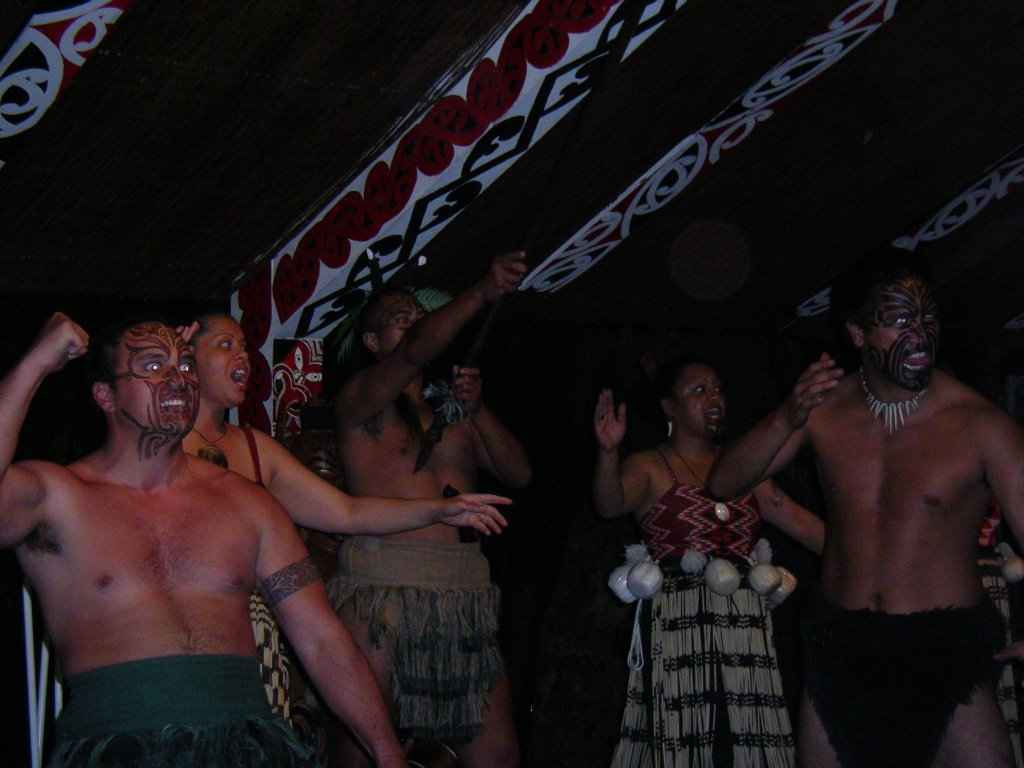
The tour started with a challenge by a group of five warriors. The challenge had to be accepted by our chiefs, elected from each bus. The oldest chief ended up accepting the challenge but bolloxed it up by not kneeling to accept the peace offering. After the challenge was the welcoming call, a beautiful keening song by the a female elder.

We were then welcome to enter the village, where we had an extremely brief tour of five cultural displays. By brief, I mean that by the time I saw one we were being ushered out of the village. There was another dance and song as we entered the meeting hall. In the meeting hall we sat and enjoyed a 20-minute performance, which included singing as well as the haka.

The haka:


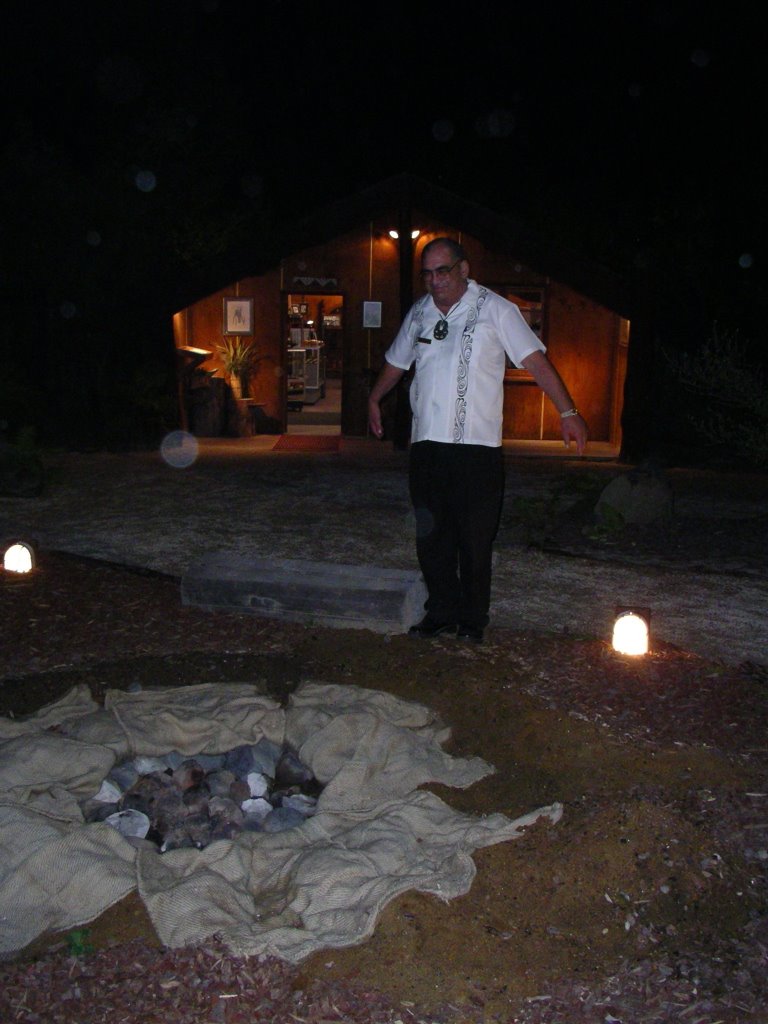
By then we were all good and hungry, so it was a good thing that our next stop was the dining hall. The food was laid out buffet-style, but had been prepared in an earth stove or hangi pit lined with hot bricks and flax and covered with wet burlap sacks and sand. The food was simple but delicious. I tried kumara (sweet potatoes) for the first time, and polished off three slices of the delicious lamb.

After dinner we were invited to go outside where our driver Wiremu explained how the hangi pit was created and how the food was cooked inside the pit. Then we had about 10 minutes to lay down cash for necklaces, carvings, and t-shirts before we were ushered back into the dining hall for a final goodbye speech and song.

Wiremu explaining the hangi pit:


The best part of the evening, in my opinion, was the drive home. Wiremu made us sing songs from our home countries – the people from the US couldn’t think of one – then he got us singing “She’ll be comin’round the mountain” as he and another driver steered their two huge buses around a big roundabout several times. It was a complete hoot.

It was raining as we arrived back at the hostel and it looks like it rained all night. I had the best sleep, though. There’s something about the sound of the rain and the freshness of the air that puts me into a deep and satisfying slumber.

This morning we’ll head back to the spa to soak in the public pools (we have a free pass). We may stop at the Internet café again before departing for Ruatoria, where we’ll be staying with friends of Bruce’s.

2pm Monday, April 3, 2006 Rotorua

We left Tauranga early, around 8:30am, and drove to Mt. Manganui for breakfast. It was pouring rain so we didn’t go for a walk on the beautiful beach. We could tell that it would be a fantastic place to relax and swim on a good day, though.

Got a bit lost leaving Mt. Manganui but eventually found our way onto the correct highway and began the slow, cautious drive to Rotorua. I was only driving at 80 to 90 km/h because of the rain.

We arrived in Rotorua around noon and, once again, found the information center quite by accident. We picked up a free map – the most inaccurate and unhelpful so far – and booked a performance and dinner at Tamaki Maori Village for the following evening. We drove to the hostel and checked in but our room wasn’t quite ready. So, we left our luggage and drove into town to the museum.

I got completely turned around because a road that was clearly marked on the map as a through road was actually a pedestrians-only shopping lane. I tried to get to the museum via another road, only to find that at a certain point it became a one-way road. Argh! I eventually found the way to the museum and parked, thankful to be off the road.

The museum was quite lovely. We started by watching a short movie about the history and culture of Rotorua. The area is volcanic and in the late 1800s there was a major eruption that destroyed the town and killed over 100 people. The benches in the theatre shook and jumped to simulate the tremors from the eruption.

From there we went to an exhibit that explained the culture of the Te Arawa, the local Maori group. It was quite informative and I really enjoyed the artifacts that the Te Arawa had shared with the museum. We also went to an exhibit about a Maori battalion that fought in WWII and was quite successful in battle. Dad would have loved that exhibit!

We saw a static exhibit about the volcanic eruption that provided more information about how the people in the town reacted during the event and how the survivors fled the area after the event. The final exhibit that we visited reviewed the museum building’s history as a geothermal spa where people came to “take the cure” for various ailments. We even walked into the basement and, hardhats on, explored the labyrinth of pipes and gauges that fuelled the spa baths.

We drove from the museum to the Polynesian Spa and booked a spa treatment for the following day (today). Then we swung by Pak ‘n’ Save and bought groceries. I wanted home-made spaghetti for dinner so we picked up some veggies, mince (ground beef), pasta, and sauce. Mom also picked up some cereal and fruit for our breakfast.

Back at the hostel, we cooked dinner and then retreated to our room to watch The Motorcycle Diaries on my laptop. Quite a few people walked by and looked in the room, probably curious how we ended up with a TV in our room.

This morning we awoke early. Mom had a shower then went over to the kitchen for breakfast. She came back within a couple of minutes, steaming mad. Someone had stolen all of our groceries, including Mom’s precious fruit. I dressed and had a shower, then we marched over to the hostel reception to complain. Apparently people had been complaining all morning about stolen food.

The first order of business this morning was to find another Flash drive (mine broke in Hamilton) so I could upload text and photos to my blog. We found a Dick Smith’s in town, I bought a Flash drive, then we wandered across the street to an Internet café where I transferred files from my laptop to the Flash drive, then from the Flash drive to Blogger. (If you’re wondering why I didn’t just plug my laptop into a network port, they charged twice the normal rate for the privelege of plugging directly into the network.)

From there we walked to a music store and bought some music for the remainder of our road trip. I’ve been humming and whistling an old Gowan song incessantly since Hamilton, where I heard it in a shop. Three or four days of the same song is a bit irritating, even for me, so Mom and I agreed it was time to get some CDs. Mom picked up some CDs of traditional Maori songs and I picked up Oceania II.

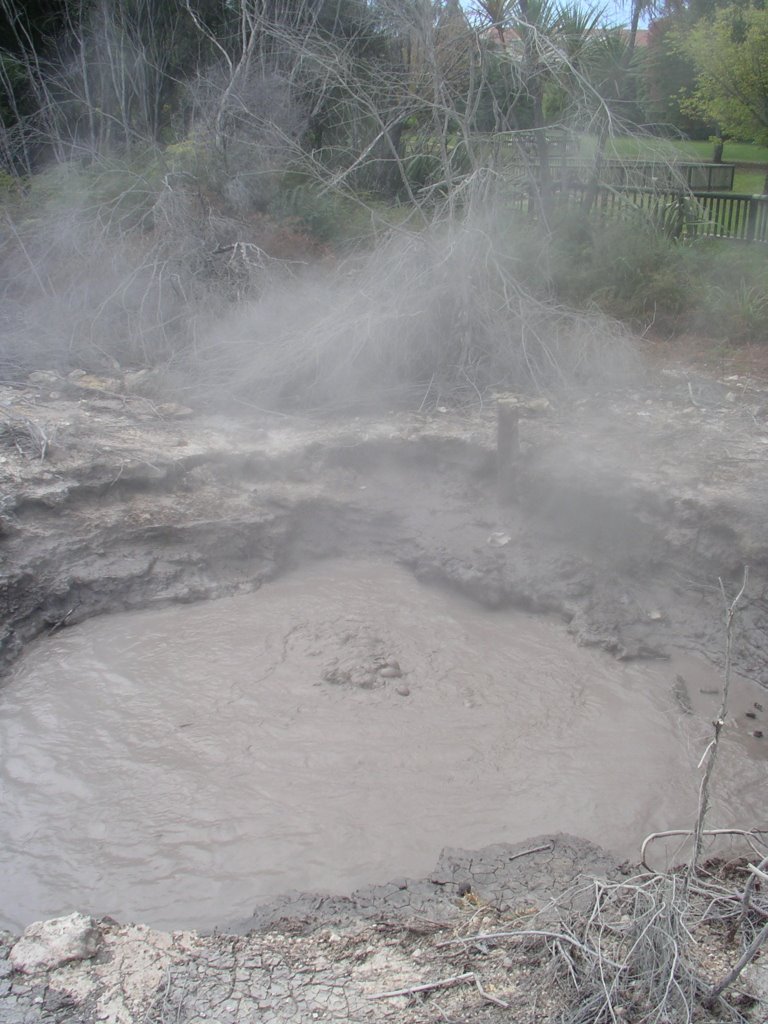
We had a quick brunch at McD’s, visited some gift shops, then drove to the park. You have to pay big dollars to gain entrance to the largest geothermal ponds and geysers and we didn’t want to spend our money on that kind of thing. The guy at the information center had circled a park area on the map and advised us to go there to see geothermal ponds for free. It was a fabulous little park and we had a great time wandering amongst stinky bubbling mud holes and stinky steamy ponds. I have some nice videos of the more interesting mud holes and ponds.

Bloop, bloop, plop - and stinky, too!


Near the car park there was a shallow geothermal pool where you could soak your feet so we pulled off our sandals and put our feet in. Shortly afterwards a whole bus load of Korean tourists arrived and joined us in the foot bath. They were very friendly and one of the fellows spoke very good English. We lingered for about 20 minutes then decided to head back to the hostel. We said goodbye to the tour group and received many waves.

We’ll head off to the Polynesian Spa shortly. Tonight is the Tamaki Maori Village tour, performance, and dinner. Should be good!

3.4.06

7:30pm Saturday, April 1, 2006 Tauranga

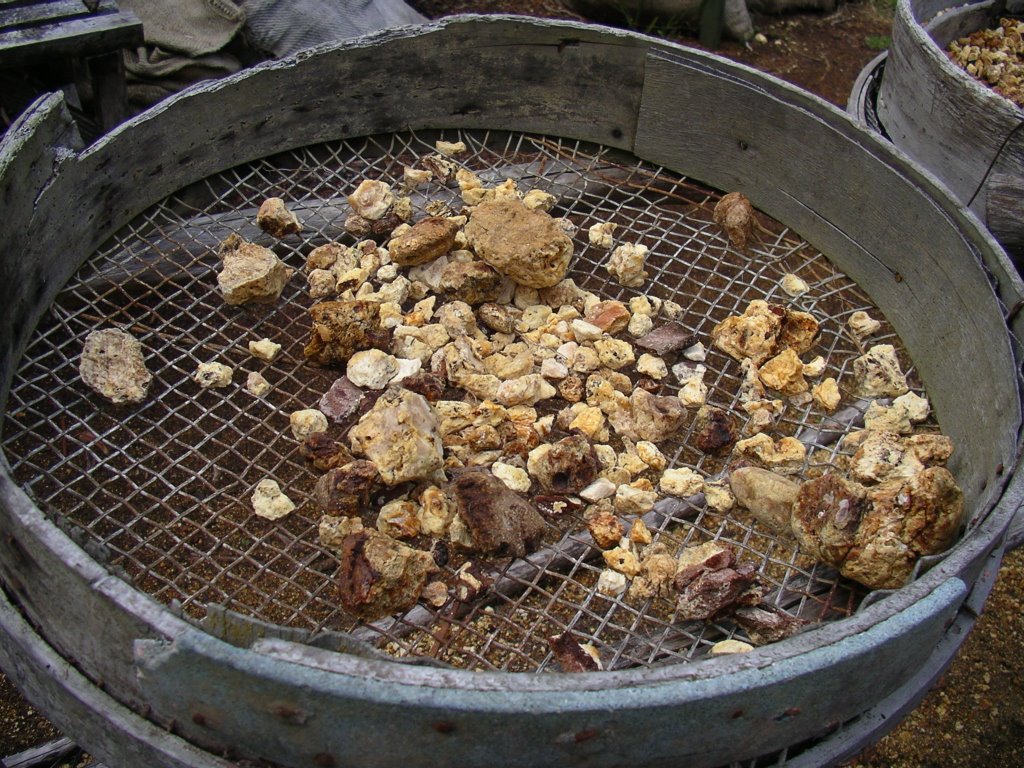
On the way to Paihia we stopped at the Gumdigger’s Fields. It was very educational to see how the gumdiggers (fellows who dug into the ground to recover the fossilized sap, i.e. amber, from the buried ancient kauri trees) lived and worked. Like many historic sites, the Gumdigger’s Fields were privately run so we had to pay a steep price to enter but it was worth it. We enjoyed the video, seeing the deep gum holes, and the recreated camps. We also enjoyed the nature walk where we learned about native flora and fauna.

Kauri gum display at the Gumdigger's Fields:


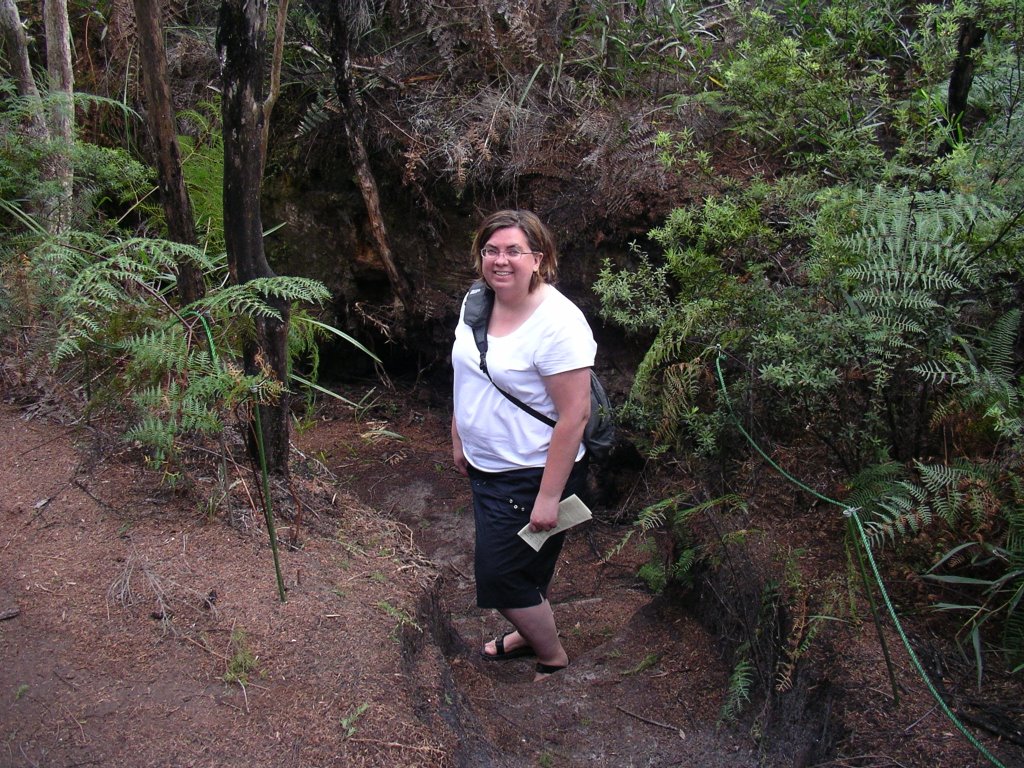
Me standing in a giant gum hole:


We arrived in Paihia around 1pm and stopped at the information center, where we booked passage on the R. Tucker Thompson for the next day and inquired about the ferry to Russell and other activities. We then drove a couple of blocks to the hostel and checked in.

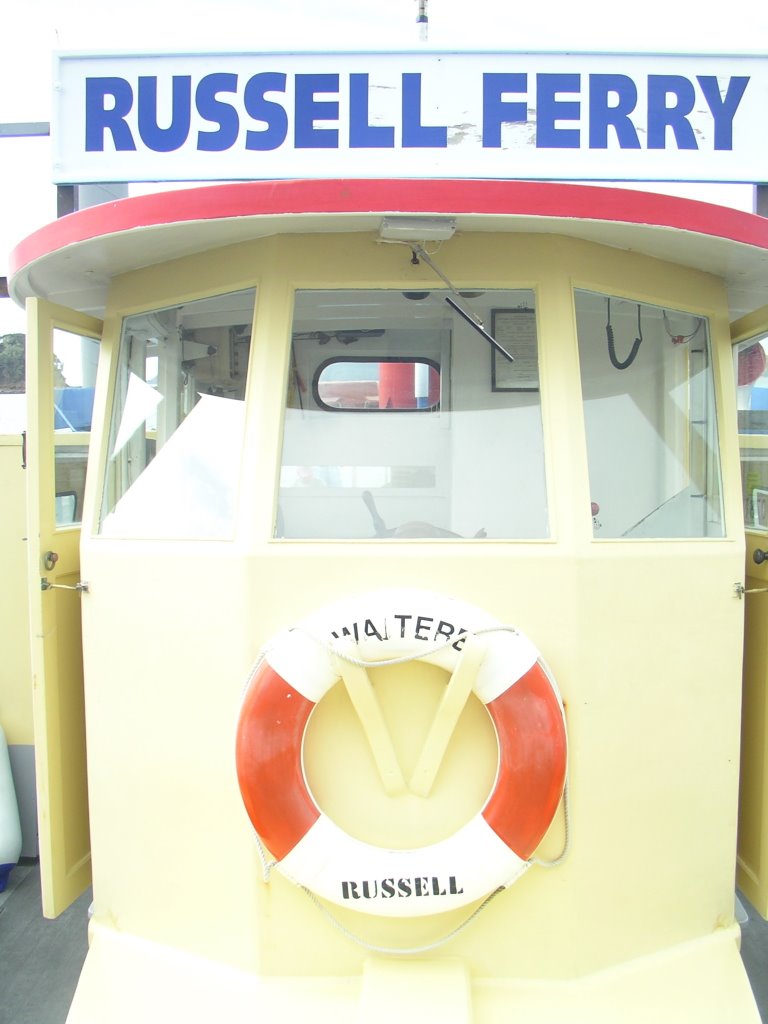
Parking was at a premium (maximum 30 minutes) in most of Paihia but we found a 4 hour parking space and had lunch, then walked to the ferry and went over to Russell. I just wanted to walk around but Mom suggested a 1-hour mini-tour run by Fullers. We went on the mini-tour, where we saw lots of historic sites and learned a great deal about the local history. It was quite entertaining and we enjoyed the stories of the tour guide. We got back to Russell around 4pm and most shops were already closing. We went to a couple of them, then caught the ferry back to Paihia.

One of the many ferries operating between Paihia and Russell:


We stopped and got Chinese take-out for dinner, and enjoyed a meal of fried rice, chow mein, spicy chicken, egg foo yong, and other yummy treats. We were in bed by 8pm again, exhausted from the trip, the sun, and the fresh air.

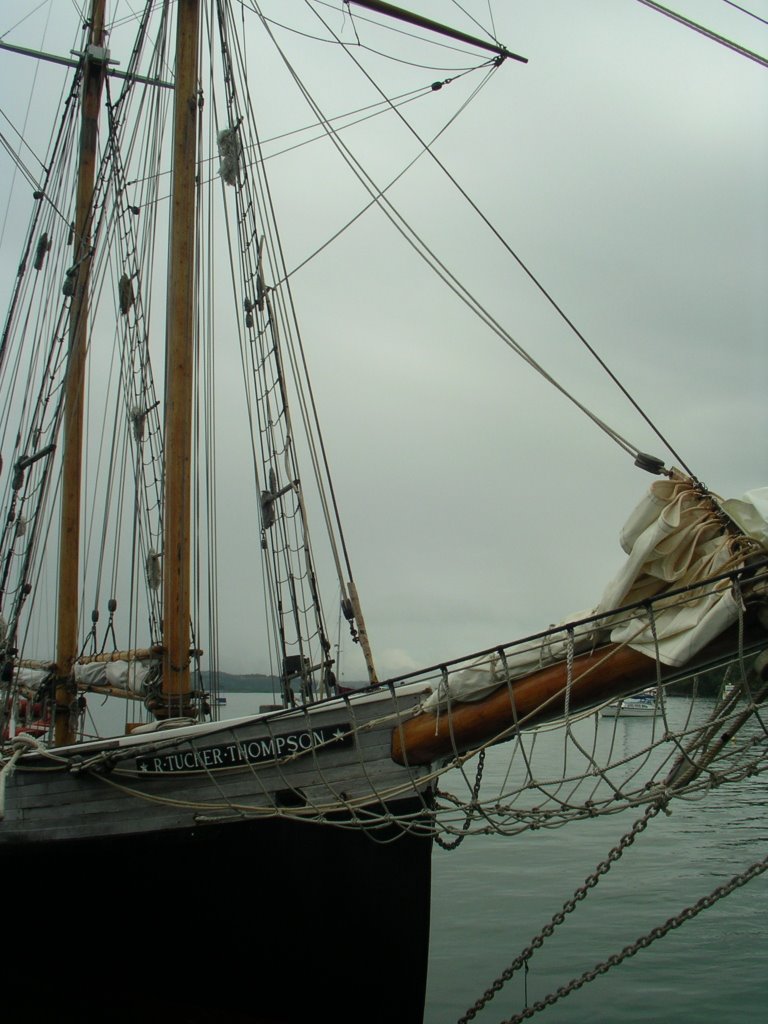
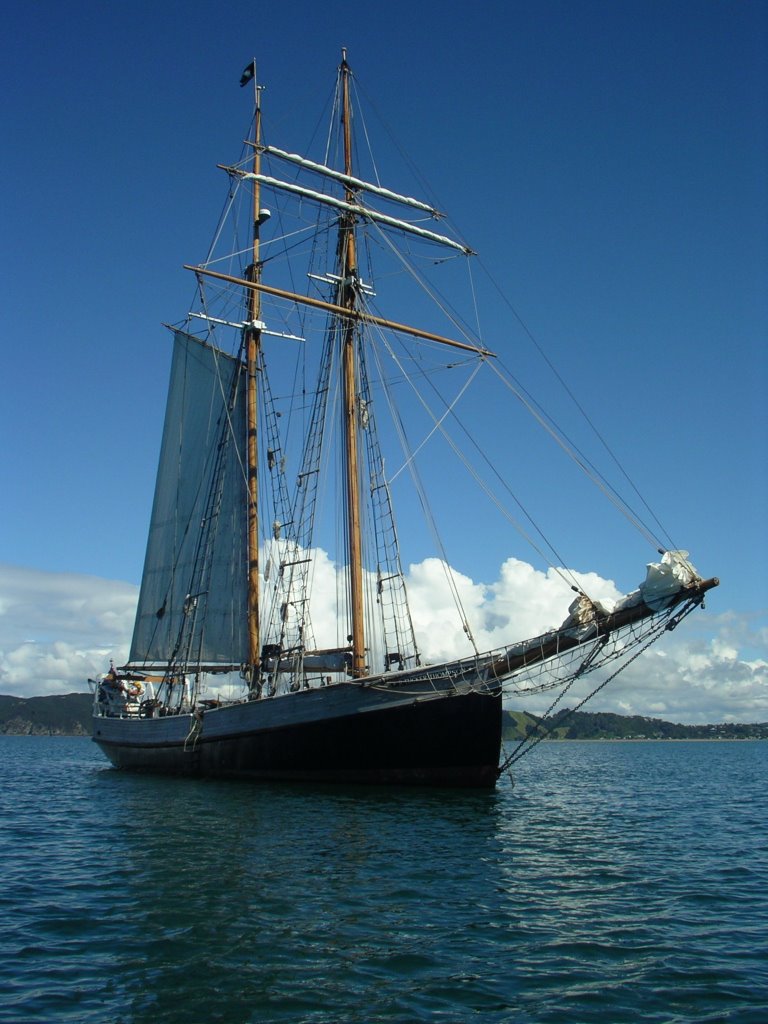
We got up early the next morning and caught the ferry to Russell, where we had a nice breakfast at the Waterfront Café then walked back to the wharf and boarded the R. Tucker Thompson, a traditional tall ship.

The R. Tucker Thompson at dock:


Captain Garth was quite a character but seemed to favour certain guests over others. Mom made a point of telling him that we were from Canada (cringe) but I suppose she was right to do so because, hell, we’re just as foreign as other foreigners who were sailing on the boat that day.

We got underway at 10am and motored to an island where Cook, as a lieutenant, had anchored and traded with the locals. We anchored and a small Zodiac took people ashore to explore the island. Mom wasn’t sure if she could climb down to the boat but when she saw me do it she was sure she could do it. She clambered down to the boat with confidence and had no problem climbing off onto the beach.

Manton and Mom on the Zodiac:


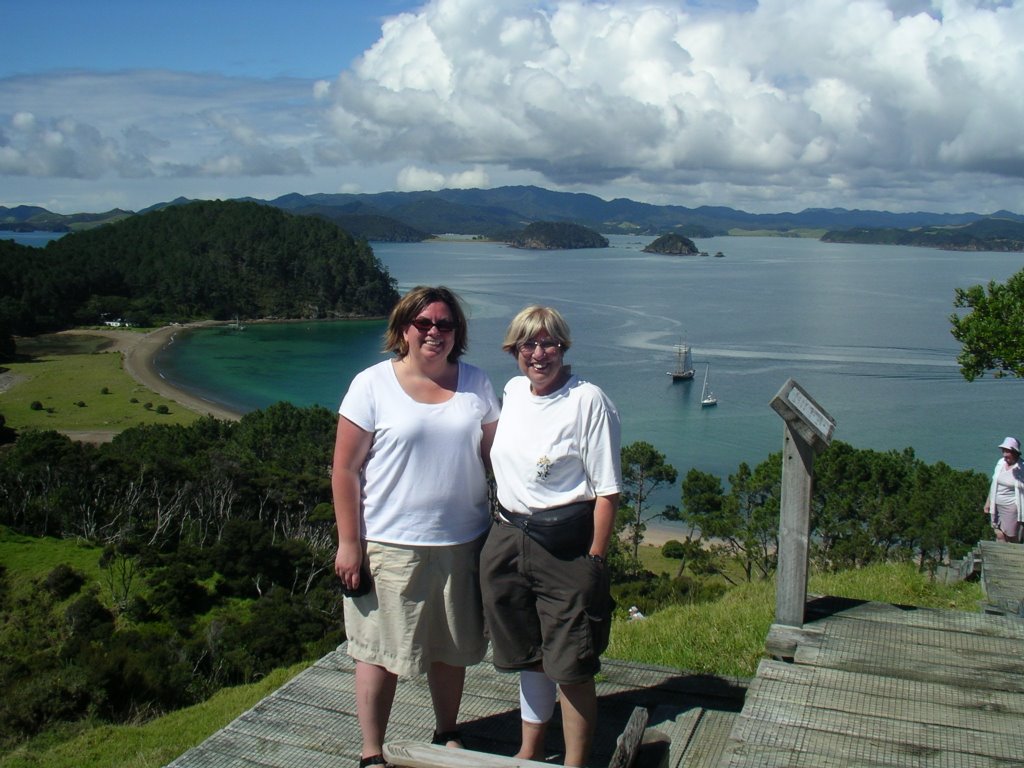
We gazed in awe at the rocky lagoon then walked up a grassy bank to a sign post, which encouraged people to walk up a path to the top of an ancient Maori pa (fortification). It was a twisty, wet path with lots of tree roots but Mom powered up the path like a trooper. After the roots there were more than 100 steps to the summit. The view at the summit was amazing and well worth the trek. We turned around and around and admired the view, and slowly more people from the R. Tucker Thompson arrived. We all took photos of each other, then Mom and I made our way back down to the beach.

Enjoying the warm lagoon waters:


Finally! Made it to the top of the hill:


We caught the Zodiac back to the ship and I immediately changed into my bathing suit. I climbed down the swim ladder then splashed back into the warm Pacific Ocean. A lot of people were complaining about how cold the water was, but I kept thinking about how cold the Pacific is on the west coast of Canada and laughed at them. I swam around the ship and talked to a few other swimmers then clambered back onto the boat – more difficult than I’d imagined.

View of the R. Tucker Thompson from the Zodiac:


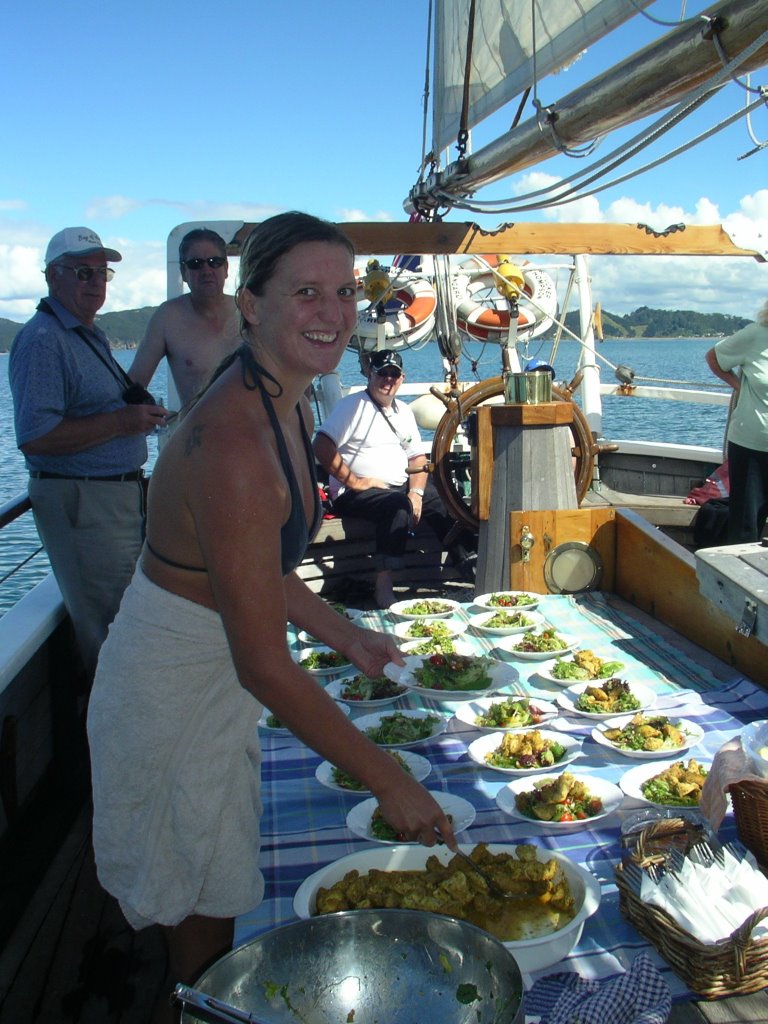
Lunch was salad with a lovely balsamic vinegar sauce, curry chicken, and bakery-fresh French bread. There was also New Zealand wine and beer. We feasted, and watched as some of the younger sailors swung off the yardarm into the sea.

Lady Sarah Battersby serving lunch:


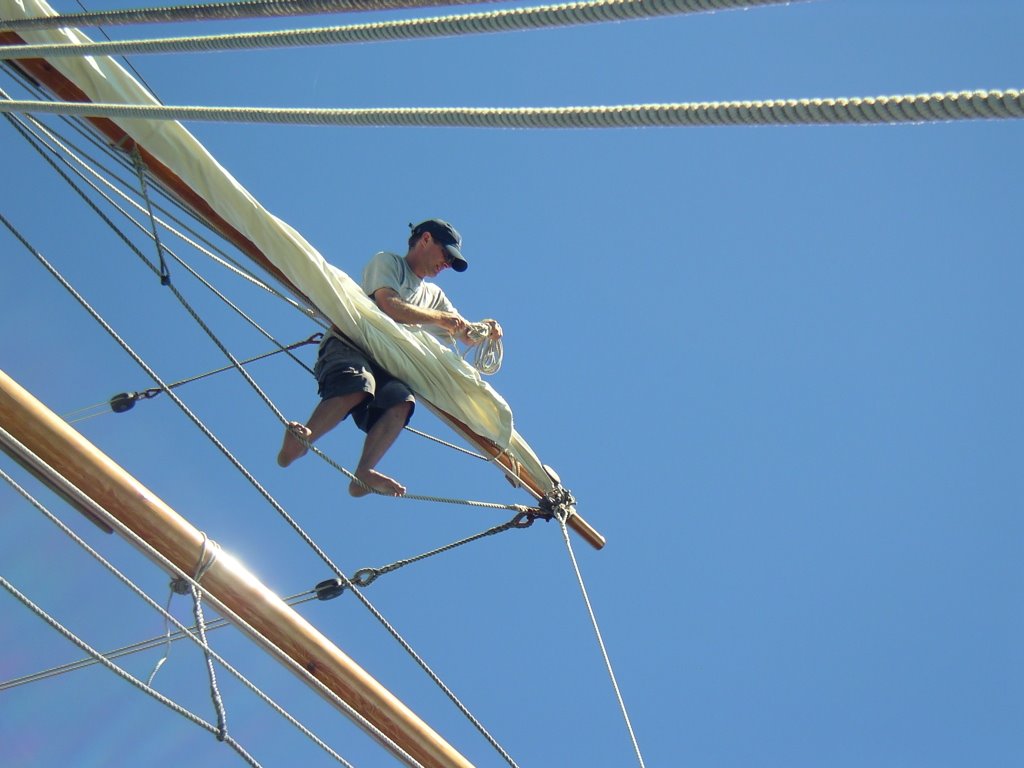
After lunch we pulled off the hook then put up the sails. We had a good westerly into Russell and enjoyed the silent power of sailing. A bit catamaran pulled alongside so Captain Garth fired off the mock-canon, to the great amusement of all passengers. The crew – Mark, Manton, and Sarah – said that sometimes the catamaran retaliated by spraying the R. Tucker Thompson with its water canon.

Mark at the topsails:


We arrived back in Russell at 4pm and most of the stores were already closed. We headed back to Paihia and had another early night.

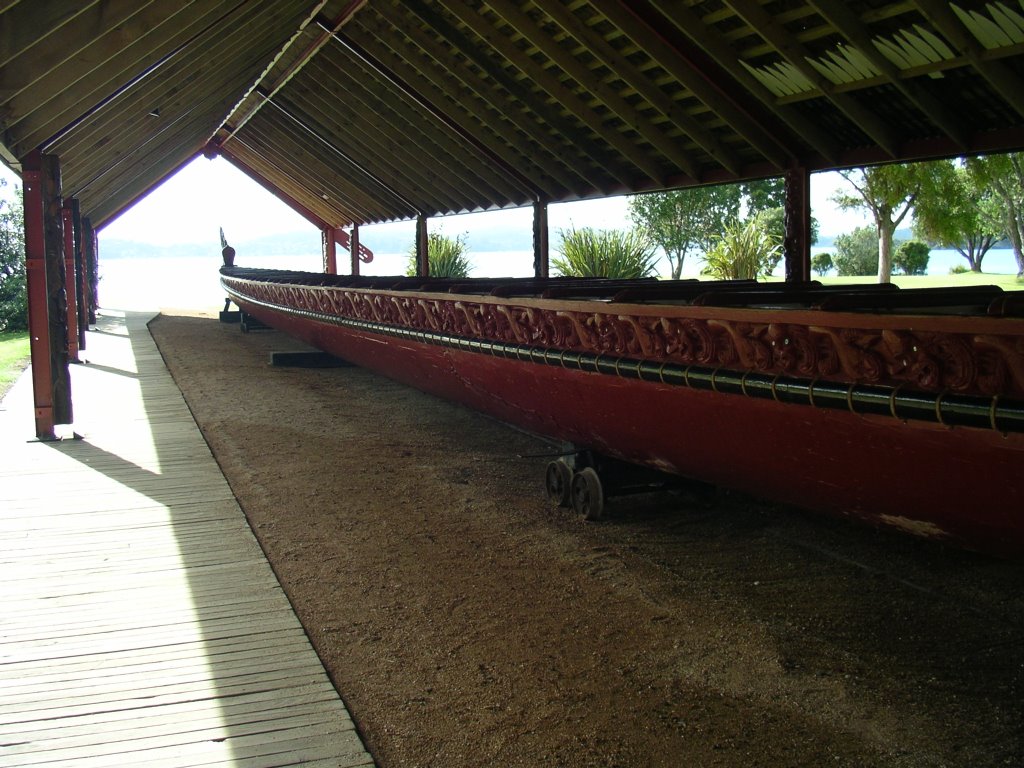
This morning we were up at 7am (Mom’s fault) and ready to go by 8am. I checked my email then we drove around a bit until 8:45am when we arrived at the Waitangi Treaty Grounds. It opened at 9am and we were the first guests in to the grounds. We enjoyed a video then walked to the giant waka (war canoe) and to the Treaty House where the Treaty of Waitangi was signed. It was very interesting to see how small the house was and to learn about how the grounds were used for mediation. From there we visited a Maori greeting house that has no name to ensure that there are no tribal arguments. We had a coffee on the way out of the Treaty grounds then started our drive south.

Traditional waka (canoe) at Waitangi Treaty grounds:


We weren’t sure how far we’d travel and just winged it. We made it to Whangerei in no time, stopped at Wellesford for lunch, drove through Auckland with no problems, had ice cream in Waihi, and arrived – 500+ kms later – at Tauranga. Like many cities in New Zealand there were plenty of signs pointing us into the city center but no information once we entered the city. I just kept driving until I hit a dead-end. Turns out we were at the bottom of Elizabeth Street and the youth hostel was at the top of the same street. We had to swing around a round-about to get to it.

They didn’t have any twin or double rooms left so we booked into a dorm room. Mom wasn’t too pleased about that, but because I’ve stayed in lots of dorm rooms I felt very comfortable and convinced her to stay.

We had dinner of soup and sandwiches in the kitchen. I checked email again – which is fantastic because the availability of email in the Northland was really limited – and now I’m updating this blog. I’m ready for bed already but 8pm is a pretty indecent time to go to bed in most dorms. I can sleep through anything but Mom’s a bit more particular.

Tomorrow we head to Rotorua where we’re looking forward to learning more about Maori culture and history.

7am Thursday, March 30, 2006 Pukenui

The drive to Whangarei was terrific. I had no problem on the highways and passed through Auckland with a minimum of panic. We stopped at a BP station just north of Auckland where we had lunch, topped up the gas tank, and enjoyed some people watching.

We arrived in Whangerei around 2pm and stopped at an information center for ice cream and to pick up a map of the town. The staff showed us how to get to the hostel, and we made it through town and to the hostel relatively easily. (I only had to cut across traffic once to get into the correct lane.)

The hostel manager, John, welcomed us and checked us into a nice twin room. At the Whangerei hostel the dorm rooms are in the main building, next to the kitchen and lounge facilities. The twin and double rooms are in a separate building, dedicated to a fellow named George Whalley, that is located down the hill a bit. The twin and double rooms all had sliding glass doors opening onto a beautiful deck where you could just stand and look out over Whangerei harbour.

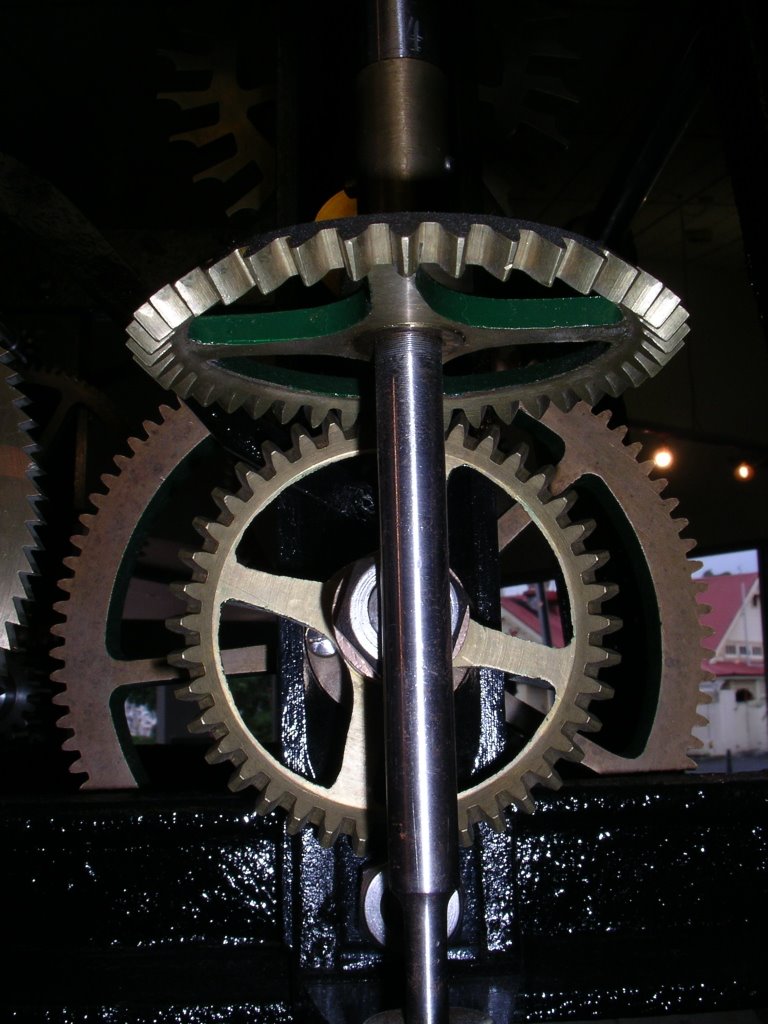
Around 3pm we decided to venture into town. I drove into an area called the Town Basin and found a parking space quite easily. We visited the clock museum where a volunteer gave us a guided tour of the hundreds of clocks. From there we wandered through some touristy shops. One shop, however, was operated as an artist’s collective and sold the work of several artisans. I was fascinated by the jewellery of one artist and bought a silver and jade ring that vaguely resembles a grasshopper.

Clock innards:


The shops closed up tight at 5pm so we wandered back to the car and decided to drive around town until we found an area with a café or restaurant. We got a bit lost but finally righted ourselves and found a parking spot on the main street. We looked at a few restaurants, mostly pubs, and settled on a Japanese restaurant. I was keen to have real sushi (in New Zealand, sushi usually contains sliced sandwich ham) and maybe some sake. A salmon roll cost $9 but I ordered it anyway. They didn’t have sake, but they did have nice green tea. We also enjoyed donburi. It was nice to have a meal that wasn’t breaded and deep fried.

We had an early night at the hostel and woke early. We had a coffee, showered, then packed the car and departed. Our first stop was Whangerei Falls. We walked down a paved path, crossed over a stream, then walked down a dirt path to the base of the falls. We were taking pictures and admiring the falls when another couple passed by and the fellow had a t-shirt that said “Ontario Parks” on it. We asked if they were from Ontario and they were, so we chatted for a bit. They were very well-travelled and had just spent a month in Australia.

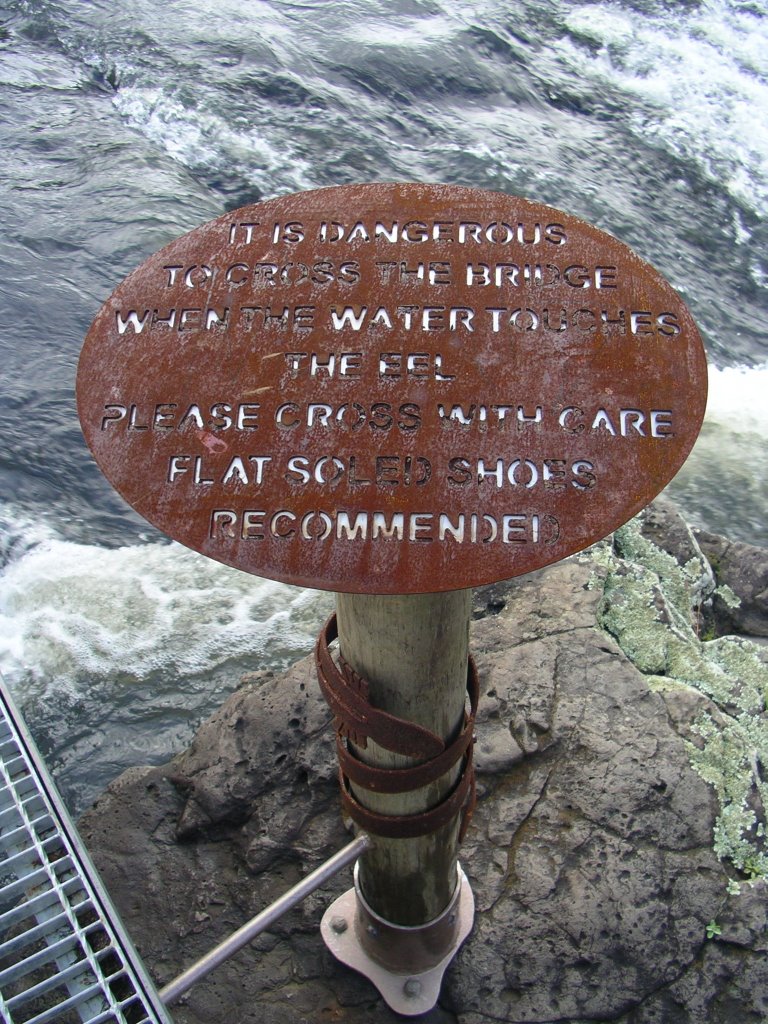
Warning sign for bridge at Whangerei Falls:


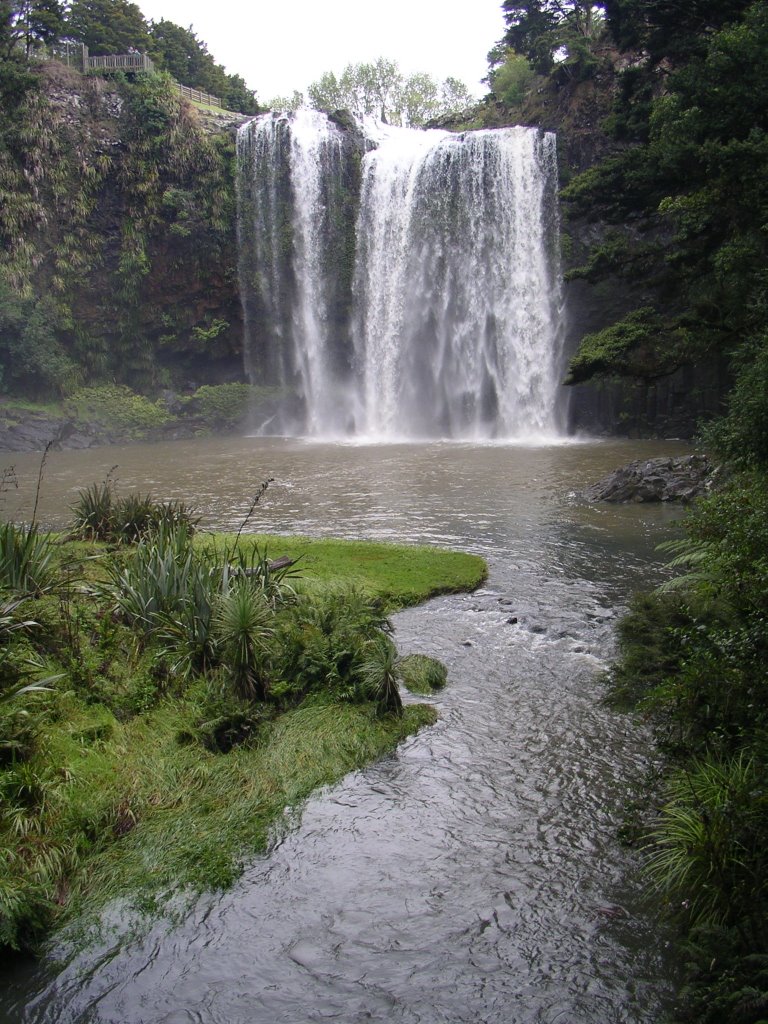
Whangerei Falls:


Mom was a real trooper on the walk back up to the parking lot. She did really well, just stopping three times to rest her leg. The walking stick that she bought in Hamilton seems to really help. We stopped at a roadside café for breakfast just north of Whangerei. I indulged in a plate of sausage, eggs, and chips while Mom had a more restrained breakfast of a muffin and coffee.

The drive to Pukenui was very interesting. The landscape changes constantly in New Zealand. We drove through rolling farmland, ascended rapidly into mountainous regions, then descended into flat river valleys.

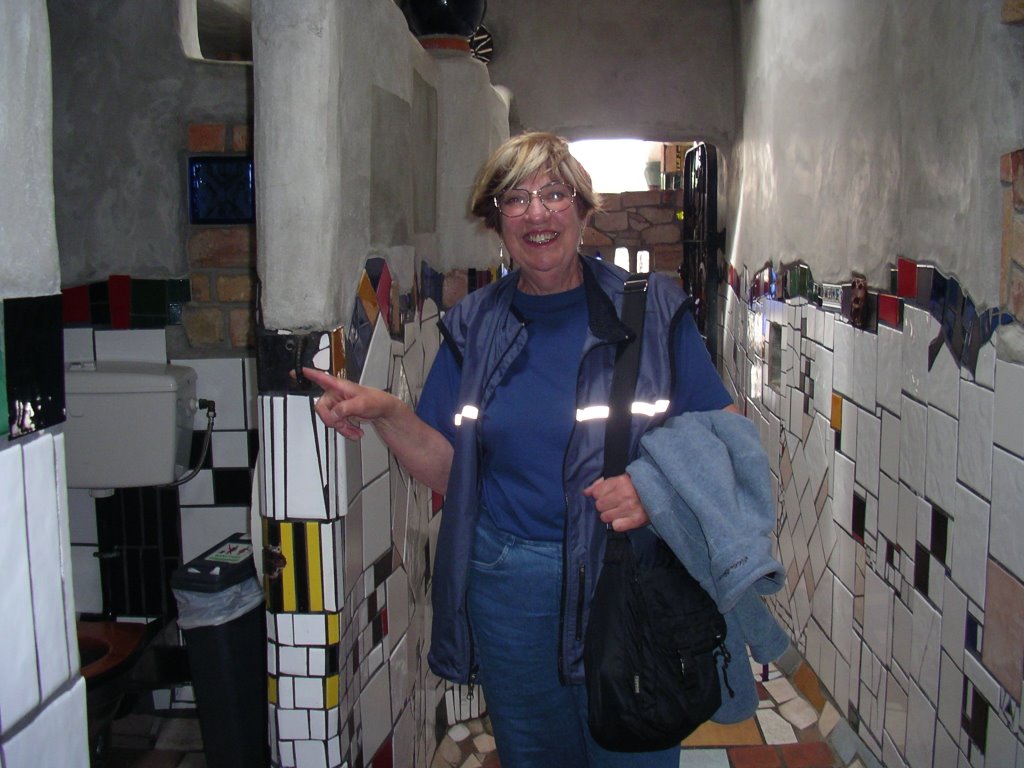
World famous bathrooms in Kawakawa:


We stopped just north of Kaitaia at the Ancient Kauri Kingdom, a big store that sells the typical tourist trinkets as well as beautiful kauri wood furniture, large kauri plates, and smaller kauri boxes and suchlike. The kauri wood has been carbon dated at between 30,000 and 40,000 years old. The kauri trees are huge – so large that there is even a spiral staircase in the Ancient Kauri Kingdom store that has been carved from a single trunk. We didn’t buy anything there because of the cost but also because we couldn’t find anything that our friends and family would find useful.

It wasn’t much further to Pukenui. We drove straight through Pukenui because we were expecting the town center to consist of something more than a general store. When we saw the “Thanks for visiting Pukenui” sign we turned around and headed back to town. We finally found the hostel, which is actually a motel that also operates a hostel. Lesa, the manager, showed us to an old building called Thomson House. In it there are five rooms, a big lounge, a smallish kitchen, and bathroom facilities. The house used to be the home of the Thomson family, who settled in the region in the late 1800s. The house was built in 1891. In 1960 it was restored and in the 1990s it was converted to a hostel.

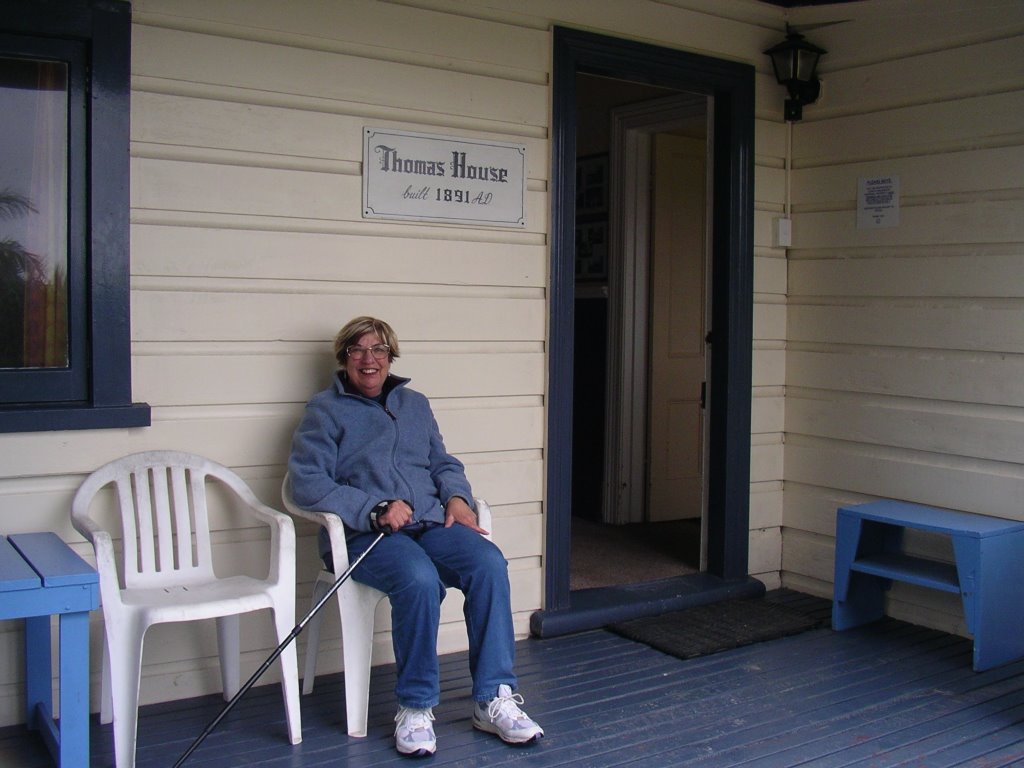
Mom resting on the bench on the balcony of Thomson House:

After we settled into our room at the hostel we drove across the highway to the general store and picked up some food. We were quite tired so we had another early night, but not before we spent some time chatting with a couple from Nova Scotia who were also staying at the hostel.

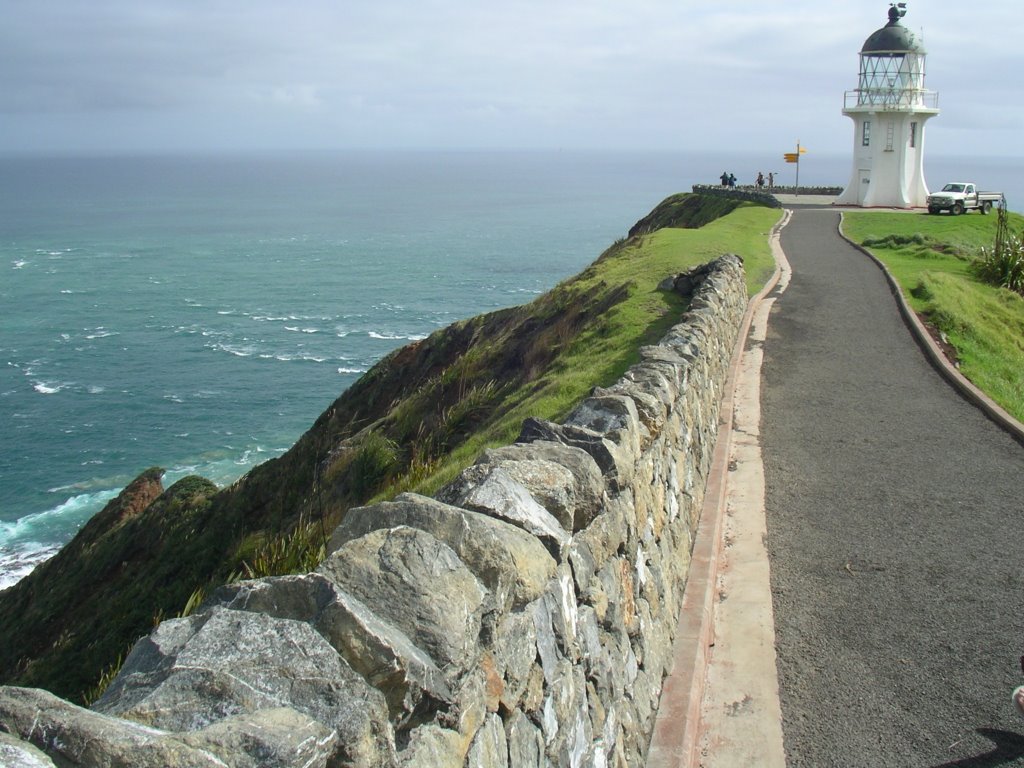
Yesterday morning we were up early. We had a quick breakfast then drove north to Cape Reinga, the northernmost point of the North Island. The last 20kms were gravel and I had fun trying to avoid the washboard as well as the slippery piles of gravel at the side of the road. It was worth the drive, though – Cape Reinga is beautiful. You can see the waters of the Tasman Sea and the Pacific Ocean mixing together just off the coast. There is an old lighthouse that is the first light that ships see when they approach New Zealand from the north.

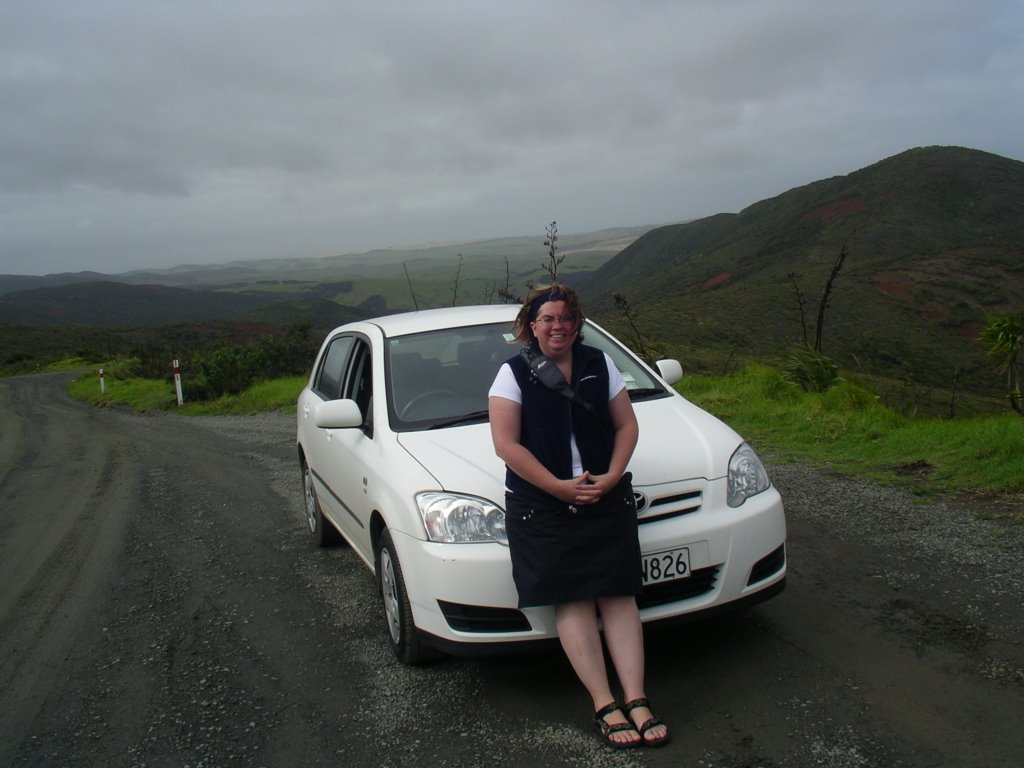
A brief stop on the gravel road to Cape Reinga:


Cape Reinga lighthouse:


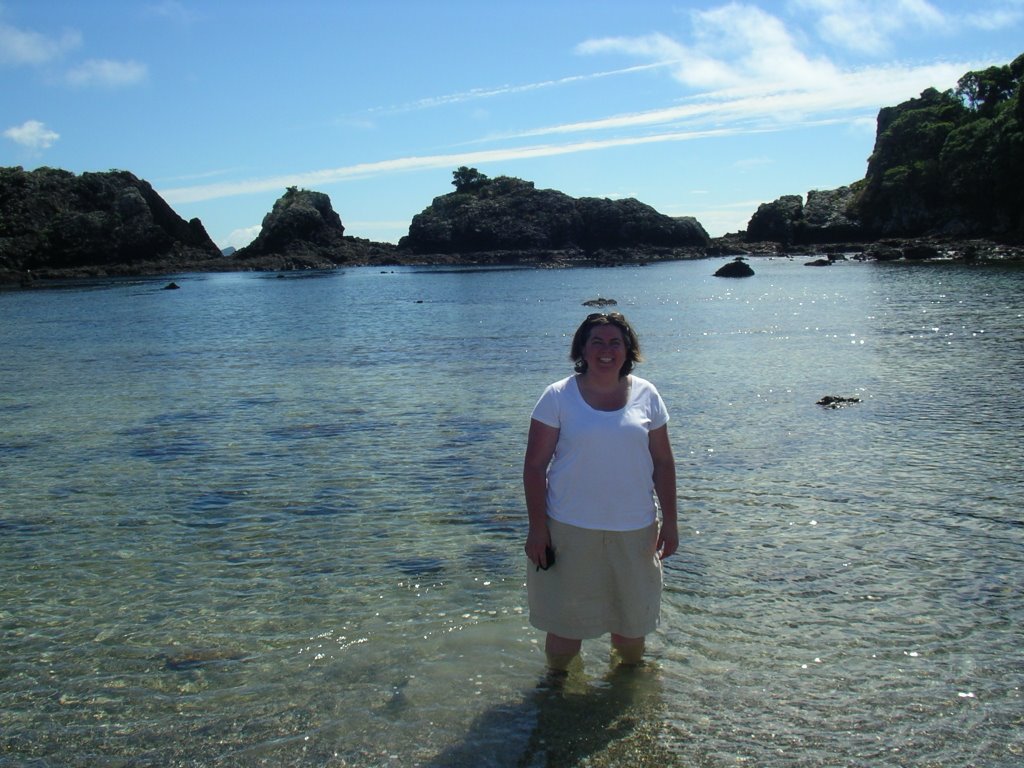
Lesa had recommended that we stop at Tapotupotu Bay, just next to Cape Reinga. We drove down another gravel road to the bay. We walked up and down the small bay, getting our feet wet in the ocean and enjoying some much-needed sunshine. I think I saw a penguin come into the beach, turn about and paddle into the surf.

Mom walking onto the beach at Tapotupotu Bay:


Feet in the Pacific Ocean at Tapotupotu Bay:


We drove back to the hostel and had lunch, then drove down a side road to 90 Mile Beach. The road, again, was mostly gravel. I was expecting a parking lot at the end of the road. Instead, the road ended on the beach. You can drive the length of 90 Mile Beach at low tide so the road just ends on the beach. It’s the strangest thing. I thought the rental car company might frown on my driving their nice little Corolla onto the beach so we parked next to a sand dune and walked down to the beach. A large 4x4 truck came off the beach, barely slowing down as it passed us.

Mom looking for pretty sea shells on 90 Mile Beach:


The beach itself is a gorgeous sand beach that stretches for miles – 90 miles, hence the name. It’s very shallow so the waves roll slowly but inexorably up the beach to your feet. There are colorful shells everywhere, tumbling in the waves or half-buried in the sand. We picked up quite a few. We walked about a kilometer down the beach, enjoying the feeling of the warm water and soft sand on our feet. Another couple of vehicles zipped past. After we’d had our fill of sand and waves we walked back to the car and drove back into town.

Lesa had also recommended that we go to a small café on the harbour, so we did. We walked along the beach which was covered with small clam shells. It was a strange feeling to crush shells with every step. There were small holes everywhere, which I assume were breathing holes for clams. The water was pretty stinky so we didn’t spend long on the beach. We were looking forward to a coffee but when we got to the café it was closed. Sigh. Instead, we drove back to the hostel and had dinner and watched a bit of telly.

This morning we’re departing for Paihia, a town on the Bay of Islands. I’m really looking forward to Paihia because we’re planning a day sail on the tall ship R. Tucker Thompson. Yay!

7:30am Monday, March 27, 2006 Hamilton

On Saturday Christine packed a picnic and we drove to Lake Mangamahoe. Christine wanted us to walk to a scenic viewpoint for a photo of the lake with Mt. Taranaki in the background. The problem was that there were two roads and neither was marked. We started on the road to the left, which had a sharp rise. We got half-way up and realized we were on the wrong road, so we turned around and climbed back down. The second road was much better groomed – big clue – and sure enough there were a few steps up to a hillock from which there was a magnificent view of the lake and mountain.

The view of Mt. Taranaki from Lake Mangamahoe:


Exiting a trail at Lake Mangamahoe:


We drove around the lake a bit until we found a sheltered area, then settled in for lunch. The swans and Canada geese were all over us, waiting for us to share our lunch. I threw a few bits of bread but the rest of my lunch went into my mouth.

Christine packing up the remains of our picnic lunch:


After Lake Mangamahoe we drove to Puke Ariki Museum in downtown New Plymouth. We grabbed a wheelchair for Mom and had a great time looking at the exhibits. One of the highlights was a movie about the development of Mt. Taranaki. It has grown and collapsed about four times. The most recent eruption was only 250 years ago! I’d hate to think of the destruction if it erupted again.

After Puke Ariki I was started to get a headache so we quickly toured another lake, dropped in on Karen and Brad, picked up a few groceries, then went back home. Christine and Peter were going out that night so Mom and I settled in for a night of TV and leftovers, which was terrific.

On Sunday morning Christine took us on a tour of their property. Smudge the cat came along for most of the trip, but kept hanging back waiting for Jay the dog to join us. Unfortunately Jay was run over a few days ago. Back at the house Smudge settled in by Jay’s house, convinced he would be around shortly.

Mom and the baby chickens that Peter rescued:


Just before 10am we loaded our luggage into Christine’s car and said goodbye to Peter who had been outside since 7:00am, trying to finish a deck before the rain set in. Christine then drove us to the airport where we picked up our rental car. Christine was almost in tears as we left. I’m glad she didn’t cry, because I would have been right there with her.

We drove cautiously along Highway 3 for the next four hours. We passed through the gorgeous Mt. Messenger scenic area, with tricky switchback turns on roads perched hundreds of feet above steep gorges. We also passed through the hilly farmland of the Waikato region, but the land got flatter the closer we got to Hamilton.

I managed to drive directly to our motel without an error. Well – correction, I cut across a lane of traffic to get to a turning lane when I realized I was going down the wrong road, but luckily no one was behind me when I did that and all was well.

The motel is right by a park, and just blocks from the main street and the Hamilton River. Our room is huge, with a king-sized bed and a small twin bed. Mom insisted on taking the twin bed, leaving me to roam around the king-sized bed last night – and roam I did!

We drove downtown and had a wander about. Mom bought a trekking stick at a MEC-like store to help her keep her balance when her leg gives out. We also stopped at an Internet café to check email, and learned that my Uncle Jim died on the 24th. I am sad about his passing but he had been in such poor health for so long that I’m glad he is free from the physical pain, emotional turmoil, and mental confusion.

We drove back to the hotel and hung out until 6pm when we drove over to the Hamilton River where we boarded the MV Waipa Delta, a replica of an 1800s paddle boat that used to work the river. It was a nice boat, with more formal dining on the main deck and a bar and jukebox on the upper deck. Dinner was “stone grill” meat and vegetables. Basically, they heat a piece of stone for hours and hours, then put meat and vegetables on it and bring it to your table. You turn the meat and vegetables until they are cooked to your liking. We both ordered the mixed platter of beef, pork, lamb, and chicken. I thought there would be small pieces of meat, but to my great surprise there were four normal portions of meat on the stone. It reminded me of the meat-fests at the Brazillian restaurant Samba in Vancouver. The beef, pork, and lamb were excellent but I overcooked my chicken and didn’t finish that.

Me, enjoying a glass of New Zealand wine and my stone grill dinner:


The food was just part of the fun. There was a Santa look-alike playing oldies with a beat machine as back-up. He mumbled his way through the lyrics so Mom and I played a game of “guess that song” based on the music. Mom did quite well.

A shot from the MV Waipa Delta:


There was also a large group there celebrating a wedding anniversary. One of the grandkids was quite precocious in a nice way, requesting songs that Santa couldn’t play and asking the staff all sorts of questions. The staff turned on the jukebox for him and from then on we had modern music upstairs and oldies downstairs.

You couldn’t see much out of the windows but if you went outside the lights from the boat illuminated the riverside. The river was flat but had a strong current. I asked the staff how they navigated and it was purely by sight, even at night. We passed under a couple of illuminated bridges and at one point lights from a building on shore created fascinating patterns on the water that were quite mesmerizing.

We waddled off the boat at 10pm and drove back to the motel, where we collapsed into bed. It was our first full day and night of travelling since we fell ill. We congratulated ourselves then fell into a much-deserved sleep.

This morning I woke early with a headache from my sinus infection, which still hasn’t cleared up. It’s annoying because I’m not sick enough to warrant a trip to the doctor, but at the same time it’s a consistent, daily problem that is just plain annoying.

We’re off to Whangarei, north of Auckland, today. It’s raining heavily there at the moment but hopefully it will clear a bit so we can enjoy 90 Mile Beach and Cape Reinga. Wish me luck on the road!

9am Saturday, March 25, 2006 New Plymouth

My, how plans change.

Mom was in hospital for a week with a bad case of pneumonia. I probably should have been in the bed next to hers, but my English stubbornness kicked in and I insisted that I just had the flu and I would be right as rain the next day. I walked to the hospital and back every day to visit Mom until the weather and my cough turned bad, then she insisted that I stay in. I amused myself by watching the Commonwealth Games on the telly.

Aunty Rose arrived home on the 19th. She is such a lovely lady. I thought I would be a bit uncomfortable around her because I’m not religious and she’s a Catholic nun. That was not the case at all – we even had a very interesting chat about faith. She believes that some people are given more faith than others and there should be no blame attached to non-belief. I explained to her that while I may lack faith, I have a good healthy dose of morals and values and that I feel I live a more “Christian” life than many Christians.

Mom was dischared on the 20th and said she was feeling well enough to take the train into Wellington on the 21st, so that’s what we did. Unfortunately Mom’s leg played up and she could only walk about ½ a block before she had to stop and rest. (Mom normally walks 2 hours a day, but when she came down with pneumonia she also developed a weakness in her leg and extreme leg pain.) We headed back to Aunty Rose’s place and Mom collapsed into a chair. After dinner she started to complain of stomach pain, and during the night she started to pass blood.

Mom and Aunty Rose, with birthday balloons from Valentine's:


At 7am we were in a cab headed back to the Hutt Hospital. Mom had more blood tests and x-rays, which all came back inconclusive. They released her at 2pm and we went back to Aunty Rose’s. Mom went to bed and I watched more of the Commonwealth Games. When Aunty Rose got home from work we had a chat to discuss what we should do: continue to the South Island or retreat to New Plymouth? Rose suggested that we go back to New Plymouth until we were both feeling ready to travel again. Hers was the voice of reason, so we got on the phone to Christine and Peter to ask if we could stay with them again. No problem, they said.

The next decision we had to make was how we would get back to New Plymouth. I thought that we could either (a) rent a car, (b) catch the bus, or (c) Simone and Bruce could drive down and pick us up. Bruce vetoed all of the suggestions and insisted we fly. Again, his was the voice of reason. I wasn’t feeling very well, so Aunty Rose got on the phone and asked Sister Meryl to book a flight for us, which she did.

The next morning we caught a cab to the Queensgate Mall, where we caught shuttle to the Wellington Airport. Mom’s leg was acting up and she could barely climb onto the shuttle but no one got up to give her a seat by the door. I carried the two large pieces of luggage on and struggled to get them into the racks. A man was sitting right in front of the rack and didn’t offer assistance, even just steading the bag as I lifted it into the rack. The next bag was a bit more challenging because I couldn’t fit both bags onto the same rack. There was a second rack but a very well-dressed lady had put her pretty pink handbag and pink jacket into the rack. I lifted the jacket and asked if she would mind shifting it off the rack. I was concerned that the bag would rub up against the jacket and get it dirty. She, however, was offended and grudgingly moved her jacket. I shoved the bag into the rack and said “Thank you very much!” quite loudly.

A few stops on, a couple with a young baby boarded the shuttle. They had two large bags, a large backpack, three small backpacks, a box, and a pram. Again, no one offered them any assistance. I went up (I was sitting toward the back of the bus) and offered to shift our bags so they could put their bags into the racks, but they said it was okay and just stacked their luggage in the aisle and in another rack. People getting on and off the shuttle seemed very put out about the bags, which was when we realized that a lot of people were just commuting into Wellington and had no plan to travel to the airport.

When we arrived at the airport everyone got off the bus, and again no one offered to help us with our bags. I grabbed one of the couple’s bags and off-loaded it, and they grabbed one of ours. Within a couple of minutes we had all of our bags in a big communal pile. Mom and I grabbed two carts and started loading our bags onto the carts. By the time the couple got their little baby into the pram I had loaded their luggage onto the cart. We stopped and shared our dismay at people’s reluctance to offer help. Then we thanked each other and went our separate ways.

The flight from Wellington to New Plymouth was pleasant, but I was in agony from a bad sinus infection. It felt like my head was going to explode. The pain actually radiated from my eye, through the sinus and cheek, and into the jaw and teeth. When we arrived at Christine and Peter’s I gobbled a couple of Tylenol then put some ice cubes into a plastic bag and just sat in silence with the ice cubes pressed against my head, trying not to cry.

That night Christine, Peter, Bruce, and Simone went out for dinner. Mom and I stayed in and watched TV. Neither of us was hungry so we had some cup-o-soup. I felt a bit peckish and opened a package of ham and made a sandwich. I shared it with Mom and she liked it so much that she made another sandwich.

I had a bad sleep that night because I was in so much pain but in the morning the pain was slightly reduced. I took some more Tylenol and used some nasal spray to relieve the pressure in my sinus. Bruce, Simone, and Christine were heading off to the Tawhiti Museum and asked if I’d like to join them. I wasn’t feeling great but went anyway.

It was a fantastic museum – privately owned , too! – with hundreds of carefully crafted miniatures and dioramas as well as life-sized figures arranged into realistic scenes with antiques and artifacts. It was pretty damned cold in the museum, though, so I snuck across the lane to Mr. Badger’s Café and enjoyed a pot of tea and a slice of quiche. There were small dioramas from The Wind in the Willows along the walls, hence the name of the café. Simone, Bruce, and Christine joined me shortly afterwards, as well as the café cat. It jumped up on Simone’s lap and promptly fell asleep. We didn’t want to shift it but we had to leave, so Simone picked it up and tried to put it down, but it refused to go. She walked over to the fireplace to put it down there, but the cat gave in and jumped down. Then it walked over to an English couple, jumped up on the woman’s lap, and promptly went to sleep again.

We had a quiet dinner at home then watched some rugby and Commonwealth Games on telly. We were all in bed by 9pm. I slept better and the pain in my sinus was tolerable this morning. At least my teeth don’t hurt any more!